A Wikipédia ainda não tem um artigo sobre este autor nesta língua. Abaixo, o texto em inglês.
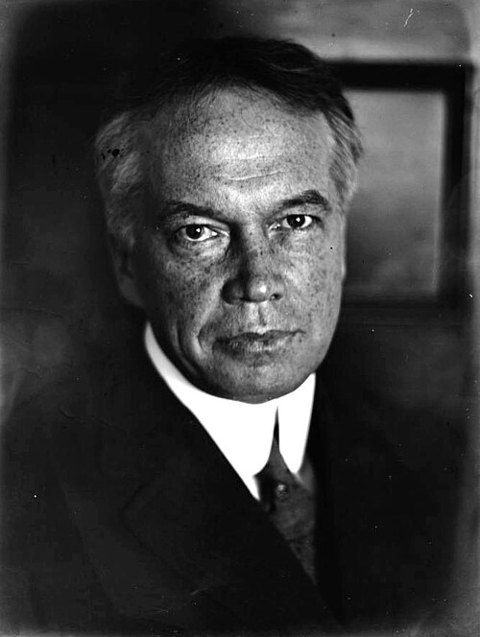
Charles Edward Russell (September 25, 1860 – April 23, 1941) was an American journalist, opinion columnist, newspaper editor, and political activist. In 1928, he won the Pulitzer Prize for Biography or Autobiography for The American Orchestra and Theodore Thomas.
Early life
Russell was born in Davenport, Iowa, a transportation center on the Mississippi River on the far eastern border of the state. His father, Edward Russell, was editor of the Davenport Gazette and a noted abolitionist. The Russell family were staunchly religious Christian Evangelicals, with Charles' grandfather a Baptist minister and his father a Sunday school superintendent and a leader of the Iowa YMCA.
Russell attended St. Johnsbury Academy (Class of 1881), in St. Johnsbury, Vermont, for his high school education and also worked under his father at the newspaper.
Russell wrote for the Minneapolis Journal, the Detroit Tribune, the New York World, William Randolph Hearst's Cosmopolitan, and the New York Herald. He was employed as a newspaper writer and editor in New York and Chicago from 1894 to 1902, working successively for the New York World, the New York American, and the Chicago American. In 1912 he appeared as one of the editors of The Coming Nation, a socialist newspaper published by J. A. Wayland and Fred D. Warren in Girard, Kansas.
Muckraking
In his memoirs, Bare Hands and Stone Walls, Russell stated that "transforming the world... to a place where one can know some peace... some joy of living, some sense of the inexhaustible beauties of the universe in which he has been placed" was the purpose that inspired his work and his life. Russell felt strongly about the hardships of the working class, particularly unfair working and living conditions. Factories often had poor workplace conditions with long hours and low wages, in addition to inadequate safety measures which lead to high rates of serious injury. Workers and their families lived in slums with little to no sanitation, making the outbreak of infectious disease a common occurrence. These issues also disproportionally affected newly arrived immigrants, and served as key inspiration for Russel and his writing.