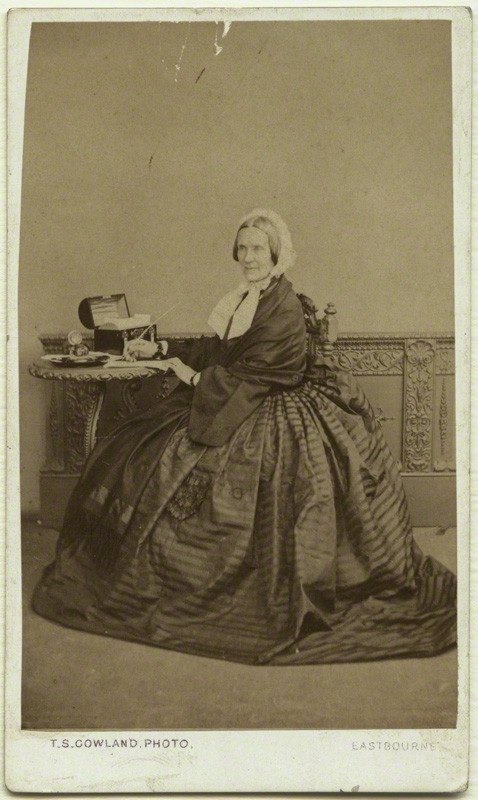
Autor
Favell Lee Mortimer
1802–1878
- Nascimento
- 14 de julho de 1802, Londres
- Morte
- 22 de agosto de 1878
- Nacionalidade
- Reino Unido da Grã-Bretanha e Irlanda
- Ocupação
- Ilustradora e escritora
Vida e obra
A Wikipédia ainda não tem um artigo sobre este autor nesta língua. Abaixo, o texto em inglês.
Favell Lee Mortimer (born Favell Lee Bevan; 14 July 1802 – 22 August 1878) was a British Evangelical author of educational books for children.
Early life
Bevan was born on 14 July 1802, at Russell Square in London, England. She was the third of eight children of Favell Bourke Lee (1780–1841) and Barclays bank co-founder David Bevan (1774–1846). When she was six the family moved to Hale End, Walthamstow, where her mother came under the strong evangelical influence of both the Rev. George Collison and the family governess Clara Claire. When Favell was twenty the family moved back to Upper Harley Street in London to enjoy a full social life and her father bought an estate in East Barnet which he named Belmont, East Barnet.
Career
Bevan oversaw the religious education of children on her father's estates, at Fosbury, in Wiltshire and in East Barnet and her interest in educational writing grew from that experience. She developed her own method of teaching children to read based on an early kind of 'flash cards' rather than the traditional hornbook, with her Reading Disentangled (1834), a set of phonics flashcards, being credited by some as the first flashcards. Her teaching notes were collected and appeared as such works as Peep of Day and Reading Without Tears. According to Todd Pruzan, "For the better part of the 19th century, Mortimer was something of a literary superstar to an impressionable audience, both in her native England and beyond." The Peep of Day series was immensely popular: over 500,000 copies of the original edition were issued; it went through numerous English editions; and it was published by the Religious Tract Society in thirty-seven different dialects and languages. Writing in The New Yorker on 4 March 1950, Mortimer's grandniece Rosalind Constable called the book, "one of the most outspokenly sadistic children's books ever written" referring to her great aunt's belief in the need to impress upon children the pains of hell that would result from wrongdoing and the rejection of salvation.
Texto: “Favell Lee Mortimer”, da Wikipédia, a enciclopédia livre, sob a licença CC BY-SA 4.0. Datas e fatos: Wikidata.
Acervo
Livros de Favell Lee Mortimer
2 livros