A Wikipédia ainda não tem um artigo sobre este autor nesta língua. Abaixo, o texto em inglês.
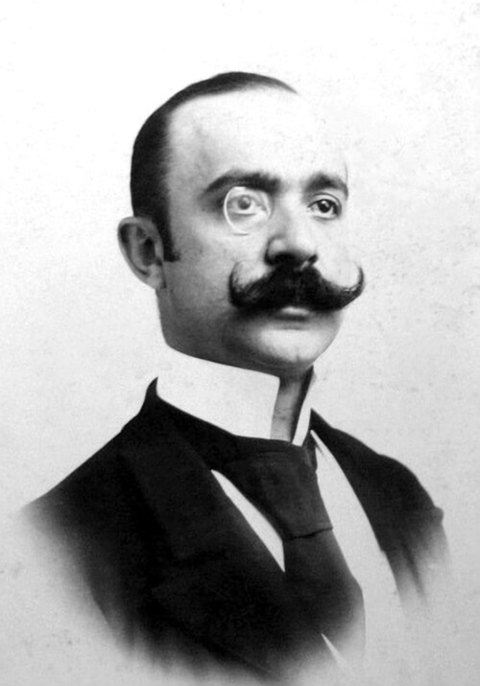
Federico De Roberto (16 January 1861 – 26 July 1927) was an Italian writer, who became well known for his historical novel The Viceroys (1894).
Biography
Born in Naples, he moved as a child with his family to Catania, where he lived practically all of his life. He began his writing career working as a journalist for national newspapers, where he met Giovanni Verga and Luigi Capuana, the most prominent writers of the Verismo movement. Verga introduced him into the literary circles of Milan.
Like Capuana and Verga, De Robertohe too observed the psychological makeup of his characters in the light of the positivist science of his times. But in contrast to his older contemporaries, he emphasized less the power of human passions and desires than their relation to an inner world of illusion and deception in which, he believed, they originated. His collections of short stories, La sorte (1887), Documenti umani (1888), Processi verbali (1890), and L'albero della scienza (1890), all explore the psychological dimension of his characters' actions. His first novel, Ermanno Raeli (1889), is largely autobiographical, while L'illusione (1891) is devoted to a female protagonist and her illusion of love.
In 1894 his novel The Viceroys (Italian: I Viceré) was published. It was the result of years of hard work, but obtained little success upon its release. Disillusionment and nervous disorders induced De Roberto to resume journalistic work: he became a writer for the Corriere della Sera and the Giornale d'Italia. Only later, after some experience as a playwright, he returned to the novel, with L'Imperio (1908–1913), an unfinished sequel to I Viceré. The novel concentrated on the public and political life of Rome, viewed through the life of the reactionary Prince Consalvo, who, at the conclusion of The Viceroys, was elected to parliament by popular vote. In L'imperio, De Roberto takes his negative perspective to the extreme point of social and political nihilism. He died in Catania on 26 July 1927, at age 66.