A Wikipédia ainda não tem um artigo sobre este autor nesta língua. Abaixo, o texto em inglês.
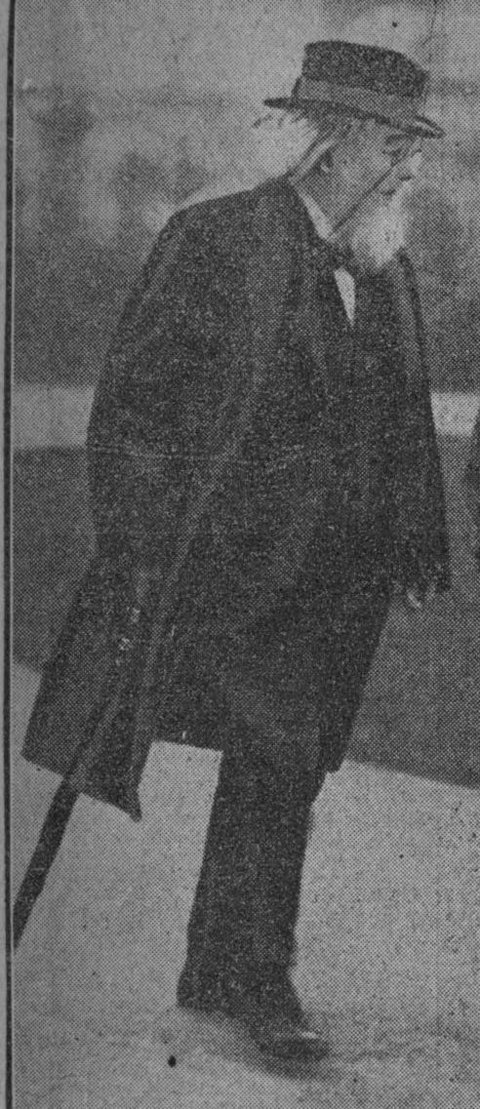
George Sigerson (11 January 1836 – 17 February 1925) was an Irish physician, scientist, writer, politician and poet. He was a leading light in the Irish Literary Revival of the late 19th century in Ireland.
Doctor and scientist
Sigerson was born at Holy Hill, near Strabane, County Tyrone, the son of William and Nancy (née Neilson) Sigerson. He had had three brothers and three sisters He attended Letterkenny Academy but was sent by his father, who developed the spade mill and who played an active role in the development of Artigarvan, to complete his education in France.
He studied medicine at the Queen's College, Galway, and Queen's College, Cork, and took his degree in 1859. He then went to Paris where he spent some time studying under Jean-Martin Charcot and Guillaume Duchenne de Boulogne at the Pitié-Salpêtrière Hospital; a fellow-student was Sigmund Freud. Sigerson published successful translations of Charcot's Clinical Lectures in 1877 and 1881.
He returned to Ireland and opened a practice in Dublin, specialising as a neurologist. He continued to visit France annually to study under Charcot. His patients included Maud Gonne, Austin Clarke and Nora Barnacle. He lectured on medicine at the Catholic University of Ireland. He was professor of zoology and later botany at the University College Dublin.
Cultural nationalist
While a student he taught himself Irish and made the acquaintance of Charles Kickham and John O'Leary.
His first book, The Poets and Poetry of Munster, appeared in 1860. He was actively involved in political journalism for many years, writing for The Nation. Sigerson and his wife Hester were by now among the dominant figures of the Gaelic Revival. They frequently held Sunday evening salons at their Dublin home, No. 3 Clare St, to which artists, intellectuals and rebels alike attended, including O'Leary, W. B. Yeats, Patrick Pearse, Roger Casement and 1916 signatory Thomas MacDonagh. Sigerson was a co-founder of the Feis Ceoil and President of the National Literary Society from 1893 until his death. His daughter, Dora, was a poet.