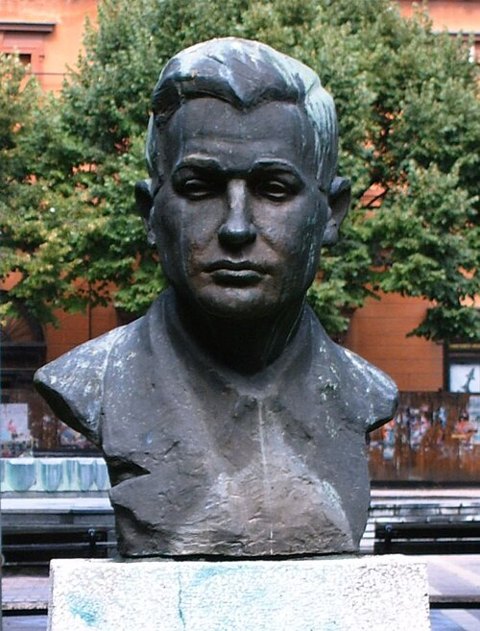
A Wikipédia ainda não tem um artigo sobre este autor nesta língua. Abaixo, o texto em inglês.
Géza Csáth (Hungarian: [ˈɡeːzɒ ˈt͡ʃaːt]; born József Brenner; February 13, 1887 – September 11, 1919) was a Hungarian writer, playwright, musician, music critic, psychiatrist, and physician. He was the cousin of Dezső Kosztolányi.
Life
Géza Csáth (pen name of József Brenner) was a writer, critic, music theoretician and medical doctor. A competent violinist even as a child, he originally wanted to be a painter, but his teachers criticised his drawing, so he turned to writing.
He was barely fourteen years old when his first writings on music criticism were published. After grammar school he moved from his native Szabadka (now Subotica in Serbia) to Budapest in order to study medicine.
While at college he wrote short sketches and reviews for newspapers and magazines. He was among the first to laud the work of Bartók and Kodály.
After earning his degree as a medical doctor in 1909 he worked for a short time as a junior doctor at the Psychiatric and Nerve Clinic (also known as Moravcsik Psychiatric Hospital).
He wrote his great novel Diary of a mentally ill woman based on his experiences as a psychiatric doctor (his other main work is his Diary).
He became interested in the effects of narcotics from a medical point of view and also as a creative artist. Out of this curiosity, he started taking morphine in 1910 and soon became addicted.
Csáth also changed his job and worked at various spas as a doctor, and had ample time for writing. Most of his emblematic "dark" short stories were written during this period, often featuring utter physical or mental violence (such as fratricide, rape or seduction and abandonment of adolescent girls). Csáth often described these acts in first person, with powerful insight into the workings of the perpetrators' disturbed minds. His collected short stories were published under the title Tales which end unhappy (Mesék, amelyek rosszul végződnek).