A Wikipédia ainda não tem um artigo sobre este autor nesta língua. Abaixo, o texto em inglês.
Al-Hariri of Basra (Arabic: أبو محمد القاسم بن علي بن محمد بن عثمان الحريري, romanized: Abū Muhammad al-Qāsim ibn ʿAlī ibn Muhammad ibn ʿUthmān al-Harīrī; c. 1054 – 10 September 1122) was a poet belonging to the Beni Harram tribe of Bedouin Arabs, who lived and died in the city of Basra, modern Iraq. He was a scholar of the Arabic language and a dignitary of the Seljuk Empire, which ruled Iraq during his lifetime, from 1055 to 1135.
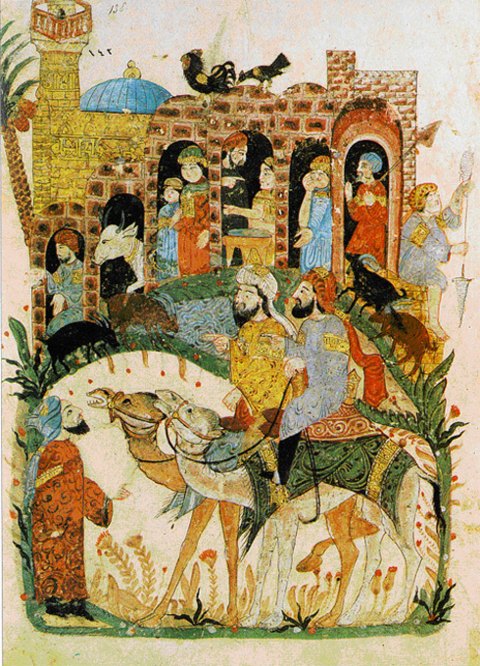
He is known for his Maqamat al-Hariri (also known as the ‘'Assemblies of Hariri'’), a collection of some 50 stories written in the Maqama style, a mix of verse and literary prose. For more than eight centuries, Al-Hariri's best known work, his Maqamat has been regarded as one of the greatest treasure in Arabic literature after the Quran and the Pre-Islamic poetic canons. Although the maqamat did not originate with al-Hariri, he elevated the genre to an art form.