Jääkärit ja aktivistit
Leitura online Ver livro
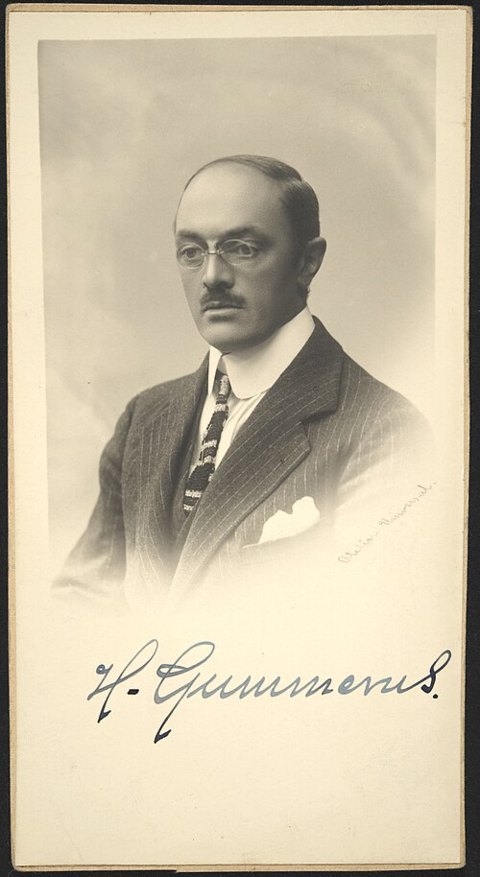
Autor
1877–1948
A Wikipédia ainda não tem um artigo sobre este autor nesta língua. Abaixo, o texto em inglês.
Herman Gregorius Gummerus (24 December 1877 – 18 July 1948) was a leading Finnish classical scholar, diplomat, and one of the founders of the Patriotic People's Movement (IKL).
Born in Saint Petersburg into a Swedish-speaking family to Herman Erik Gummerus and Olga Elisabeth Krook, Gummerus became an expert on the economy and society of Ancient Rome, and lectured at the University of Helsinki from 1911 to 1920 and again from 1926 to 1947. He initially studied in Helsinki, and then specialized in ancient history under the direction of Eduard Meyer in the University of Berlin.
His studies on Rome were particularly concerned with rural life in the later period of the empire, a subject upon which he wrote widely. Gummerus' doctoral dissertation Der römische Gutsbetrieb als wirtschaftlicher Organismus nach den Werken des Cato, Varro und Columella (1906) examined large Roman estates using mainly literary sources. A new edition of the dissertation was published in Germany in the 1960s, and key parts were translated into Italian in 1982. He further examined the economic system of the Roman empire in an article (Industrie und Handel, RE IX (1916), coll. 1381–1535) published in the Pauly–Wissowa classical encyclopedia, this time systematically using Archeological artifacts in his study. This article remained the standard work on the subject for half a century. Gummerus' technique predated the work of Michael Rostovtzeff by a decade.
An early advocate of Finnish independence, Gummerus was suspected of involvement in the assassination of Nikolai Bobrikov and imprisoned in 1904, spending time in Peter and Paul Fortress before being released in October of that year. He went on to edit the journal Framtid and before forming the anti-Russification Wetterhof Bureau (later Finnish Bureau) in Germany in 1915. During the First World War he led the Stockholm delegation working for Finnish liberation and organised the Finnish Jäger Movement in 1915–1918. After independence had been achieved Gummerus was appointed to posts in Stockholm and Kiev, where he had extended his anti-Russian activity and where he helped set up a legation during Ukrainian People's Republic's brief independence. He became Envoy to Rome in 1920 (a post he held until 1925) and developed an admiration for the growing fascist movement whilst in Italy. His wife Alexandrine (San) Hedenberg was initially an asset in his diplomatic career, but her unconventional behaviour came to be seen as a liability. His diplomatic career ended in 1925, most likely due to Finland adopting a more cautious foreign policy following Soviet concerns about British relations with Finland and the border states, rather than for personal reasons.
Texto: “Herman Gummerus”, da Wikipédia, a enciclopédia livre, sob a licença CC BY-SA 4.0. Datas e fatos: Wikidata.
Acervo
1 livro