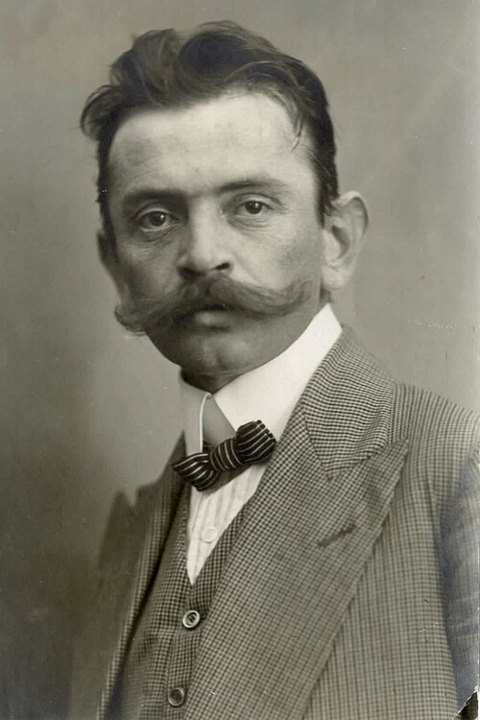
Autor
Ivan Cankar
1876–1918
- Nascimento
- 10 de maio de 1876, Vrhnika
- Morte
- 11 de dezembro de 1918, Liubliana
- Nacionalidade
- Os Reinos e Terras Representados no Conselho Imperial e Reino dos Sérvios, Croatas e Eslovenos
- Ocupação
- Poeta, escritor, romancista, político e ensaísta
Vida e obra
A Wikipédia ainda não tem um artigo sobre este autor nesta língua. Abaixo, o texto em inglês.
Ivan Cankar (pronounced [ˈíːʋan ˈtsàːŋkaɾ],) (10 May 1876 – 11 December 1918) was a Slovene writer, playwright, essayist, poet, and political activist. Together with Oton Župančič, Dragotin Kette, and Josip Murn, he is considered as the beginner of modernism in Slovene literature. He is regarded as the greatest writer in Slovene, and has sometimes been compared to Franz Kafka and James Joyce.
Biography
Ivan Cankar was born in the Carniolan town of Vrhnika near Ljubljana. He was one of the many children of a poor artisan who immigrated to Bosnia shortly after Ivan's birth. He was raised by his mother, Neža Cankar née Pivk, with whom he established a close, but ambivalent relationship. The figure of a self-sacrificing and submissively repressive mother would later become one of the most recognizable features of Cankar's prose. After finishing grammar school in his hometown, he studied at the Technical High School (Realka) in Ljubljana (1888–1896).
During this period, he started writing literature, mostly poetry, under the influence of Romantic and post-Romantic poets such as France Prešeren, Heinrich Heine, Simon Jenko and Simon Gregorčič. In 1893, he discovered the epic poetry of Anton Aškerc, which had a huge influence on the development of his style and ideals. Under Aškerc's influence, Cankar rejected the sentimental post-Romantic poetry and embraced literary realism and national liberalism.
In 1896, he enrolled at the University of Vienna, where he studied engineering, but later switched to Slavic philology. In Vienna, he soon started to lead a bohemian lifestyle. He came under the influence of contemporary European literature, especially decadentism, symbolism and naturalism. He became friends with Fran Govekar, a young Slovene writer and intellectual living in Vienna, who introduced him to positivism and naturalism. Between 1897 and 1899, Cankar's core ideas were essentially positivistic. In the spring of 1897 he moved back to Vrhnika. After his mother's death in autumn of the same year, he moved to Pula and in 1898 back to Vienna, where he lived until 1909.
Texto: “Ivan Cankar”, da Wikipédia, a enciclopédia livre, sob a licença CC BY-SA 4.0. Datas e fatos: Wikidata.
Acervo
Livros de Ivan Cankar
2 livros