A Wikipédia ainda não tem um artigo sobre este autor nesta língua. Abaixo, o texto em inglês.
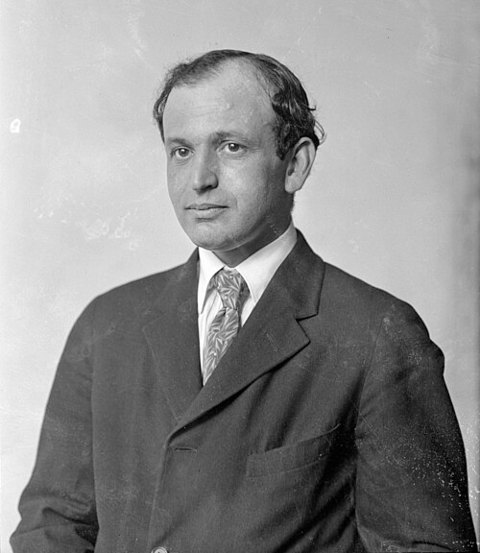
James Oppenheim (24 May 1882 – 4 August 1932) was an American poet, novelist, and editor. A lay analyst and early follower of Carl Jung, Oppenheim was also a founder and editor of The Seven Arts.
Life and work
Oppenheim was born in St. Paul, Minnesota, on May 24, 1882, the son of Joseph and Matilda (Schloss) Oppenheim. His father died when he was six and his family's circumstances changed. He was educated in public schools and at Columbia University.
Oppenheim married Lucy Seckel and had two children, Ralph and James Jr. (alias Garrett). Seckel filed for divorce following the publication of his 1914 novel, Idle Wives.
Oppenheim was assistant head worker at the Hudson Guild Settlement in New York from 1901 to 1903. He then worked as a teacher and acting superintendent at the Hebrew Technical School for Girls in New York from 1905 to 1907. After the collapse of The Seven Arts, he studied and wrote about psychology, in particular the works of Carl Jung. Oppenheim died from tuberculosis in New York City on August 4, 1932.
Career
Oppenheim was a writer of short stories and novels. His poetry followed Walt Whitman's model of free verse ruminations on "social and democratic aspects of life". Oppenheim depicted labor troubles with Fabian and suffragist themes in his novel, The Nine-Tenths (1911) and in his famous poem Bread and Roses (1911), inspired by a speech given by Helen Todd.
The slogan Bread and Roses is now commonly associated with the pivotal 1912 textile workers' strike in Lawrence, Massachusetts. The poem was later set to music in 1976 by Mimi Fariña and again in 1990 by John Denver.