Autor
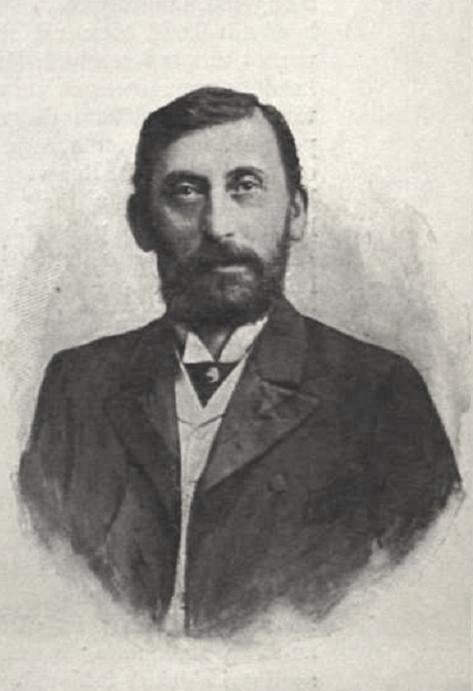
Lajos Dóczi
1845–1919
- Nascimento
- 29 de novembro de 1845, Sopron
- Morte
- 27 de agosto de 1919, Budapeste
- Nacionalidade
- Hungria
- Ocupação
- Linguista, poeta, tradutor, jornalista e libretista
Vida e obra
A Wikipédia ainda não tem um artigo sobre este autor nesta língua. Abaixo, o texto em inglês.
Baron Lajos Dóczi, aka Dóczy (Hungarian: Dóczi Lajos, báró, German: Ludwig (Louis) Dóczy (born "Dux"), 29/30 November 1845, Sopron (Oedenburg) - 28 August 1918, Budapest) was a Jewish (later Christian) Hungarian poet and journalist. His father, Adolf Dux, was a wine trader, not to be confused with the writer of the same name, Adolf Dux.
Biography
His father was Mór Dux, a leather merchant who went bankrupt during the War of Independence. His mother was Róza Rosenberg. His father, after the assets of unfortunate companies were completely ruined during the War of Independence, moved with his family to Németkeresztúr and joined the shop of his brother-in-law, Mór Rosenberg as a business manager. From there, his son Lajos went to Nagykanizsa to see Mrs. Lövinger, his mother's sister, in whose elementary Jewish school he completed the six elementary classes; then in Keresztúr he was initiated into the Talmudic sciences by the teacher of the village. In 1856, his parents sent him to the grammar school in Sopron, where he became the leader of the youth together with Jenő Rákosi. After completing his secondary school studies, he studied law at the University of Vienna and became a member of the editorial board of the Presse. He reported on the coronation to the Presse, and his articles caused a great sensation. As a correspondent, he became the centre of the literary society whose lifeblood was Adolf Ágai, Lajos Asbóth, László Hevesi, Ivor Kaas, Manó Kónyi, Tóbiás Lőw and Jenő Rákosi. He also constantly wrote for the then high-level political satirical magazine Borsszem Jankó, and at the same time he was an enthusiastic defender of Ferenc Deák's politics in newspaper articles. In 1868, Boldizsár Horvát ordered him to the Prime Minister's Office as a draftsman, but as early as 1872, Count Gyula Andrássy, Minister of Foreign Affairs, took him to Vienna, and Dóczi soon became a Hungarian court counsellor and ministerial class counsellor. At the same time, he was a member of the Kisfaludy and Petőfi Societies. On 8 June 1878, he was elected to the nobility, then 1900. On 13 March, he received the title of baron and the noble prefix "Németkeresztúr" from Franz Joseph I, King of Hungary.
Texto: “Lajos Dóczi”, da Wikipédia, a enciclopédia livre, sob a licença CC BY-SA 4.0. Datas e fatos: Wikidata.
Acervo
Livros de Lajos Dóczi
1 livro