Autor
Ludmilla Assing
Escritora alemã
- Nascimento
- 22 de fevereiro de 1821, Hamburgo
- Morte
- 25 de março de 1880, Florença
- Nacionalidade
- Hamburgo
- Ocupação
- Tradutora, escritora, salonnière, biógrafa e artista visual
Vida e obra
A Wikipédia ainda não tem um artigo sobre este autor nesta língua. Abaixo, o texto em inglês.
Rosa Ludmilla Assing (22 February 1821 in Hamburg – 25 March 1880 in Florence) was a German writer, who also wrote under the pseudonyms Achim Lothar and Talora.
Life
Ludmilla Assing was the second daughter of author Rosa Maria Varnhagen and David Assur Assing, a physician from Königsberg. Her elder sister Ottilie Assing was a feminist author and abolitionist activist.
David Assing converted to Lutheranism so he could marry Ludmilla's mother, Rosa Maria Assing — although, seeking the company of other Jews, the family moved into a Jewish neighbourhood where Assing would feel more comfortable.
Ludmilla's parents were liberal intellectuals and held cultural salons attended by authors and thinkers including Heinrich Heine, Friedrich Hebbel, Karl Gutzkow and poets of the Young Germany (Junges Deutschland) movement.
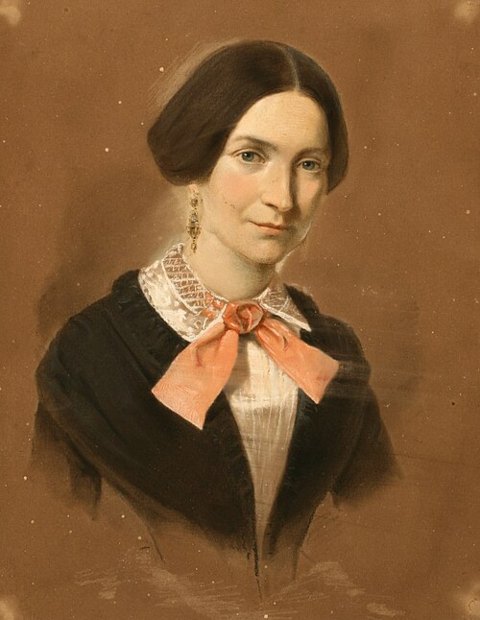
After the death of her parents she moved to Berlin to live with her uncle, author Karl August Varnhagen von Ense, Ludmilla's mother's younger brother. As well as conversing about politics, she made accomplished pastel portraits of Varnhagen's visitors including Gottfried Keller, with whom she corresponded for many years. Her sister Ottilie left home after an argument and later emigrated to the US.
On her uncle's death in 1858 Ludmilla inherited his collection of documents. She prepared the scandalous letters of Alexander von Humboldt for publication in 1869 and Varnhagen's diaries which appeared in print from 1862 to 1870 in 14 volumes. This brought her worldwide fame but also into conflict with the authorities. Otto von Bismarck ordered that the diaries covering the year 1848 be seized, and forbade their publisher Brockhaus from distributing them. Assing fled to Florence in Italy and continued her activities as an author and editor. She joined the left wing of the Risorgimento movement to unify Italy and wrote about politics in Italian and German for periodicals in each country as well as translating Italian texts into German.
Texto: “Ludmilla Assing”, da Wikipédia, a enciclopédia livre, sob a licença CC BY-SA 4.0. Datas e fatos: Wikidata.
Acervo
Livros de Ludmilla Assing
1 livro