A Wikipédia ainda não tem um artigo sobre este autor nesta língua. Abaixo, o texto em inglês.
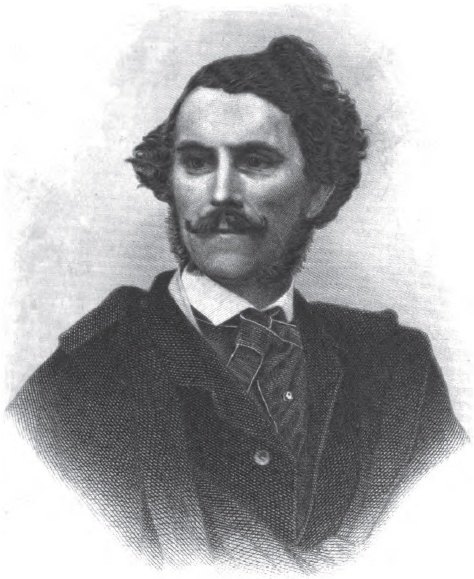
Otto Julius Bernhard von Corvin-Wiersbitzki (12 October 1812 – 2 March 1886) was a German author.
Biography
Corvin was born in Gumbinnen (Prussia) to the Rittmeister, and later director of the postal administration, of Gumbinnen Friedrich August Heinrich von Corvin-Wiersbitzki. His parents divorced in his childhood and after his father's death in 1822 Corvin was raised by his mother, who had moved to Halberstadt. He attended military school in Potsdam and Berlin-Lichterfelde, eventually becoming a lieutenant in the Prussian Army.
He left the military in 1835 to devote himself to writing. His novels and dramas did not attract notice, but a book of instruction on swimming — he was very talented in this area having organized the swimming pool at his army post and taught the people there how to dive and swim — was quite popular. He also founded magazines on outdoor life and horses, the first of their kind in Germany, and they did well. With this success, he was able to marry. In Leipzig, he put out a sports almanac for 1844 and Taschenbuch für Jäger und Naturfreunde (Handbook for Hunters and Friends of Nature).
His circle of friends crystallized into the first literary club in Germany, and they waged a small war against the police and bureaucracy. An enthusiastic Protestant, he wrote historical studies of which Historische Denkmale des christlichen Fanatismus (Historical Monuments to Christian Fanaticism; 1845) is a typical title. This particular book was released in conjunction with the inauguration of the German Catholic movement in Leipzig, and was later republished as Der Pfaffenspiegel (1869) and supplemented by Die Geissler (3d ed., 1892–1893). A political magazine, Die Locomotive, was shut down by the government censors. His Illustrirte Weltgeschichte für das Volk (Popular Illustrated History of the World) did very well. In search of an effective and cheap reproduction technology for the illustrations in his History, he developed a process eventually called "Corviniello," later fine-tuned while he was in prison, which became widely used.