A Wikipédia ainda não tem um artigo sobre este autor nesta língua. Abaixo, o texto em inglês.
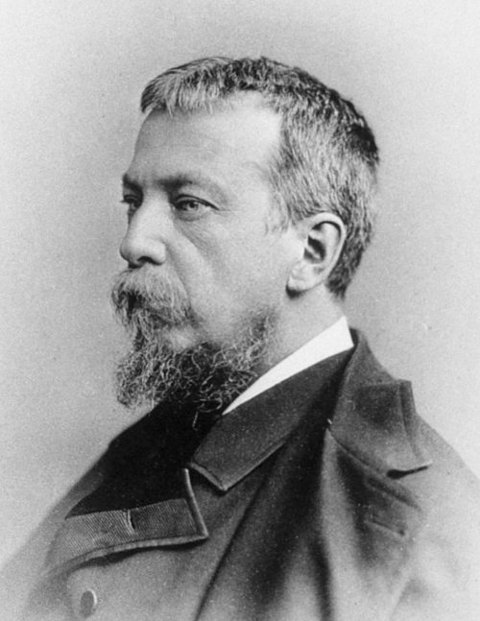
Silas Weir Mitchell (February 15, 1829 – January 4, 1914) was an American physician, scientist, novelist, and poet. He is considered the father of medical neurology, and he discovered causalgia (complex regional pain syndrome) and erythromelalgia, and pioneered the rest cure.
Many of Mitchell's theories were rooted in the Victorian belief that women's brains were fragile and ill-suited to modern education and intellectual strain. He believed that women who attempted to overstep their "natural limits" suffered from nervous exhaustion. While Mitchell made groundbreaking contributions to mainstream neurology, his approach to women's mental health is widely criticized today as medical misogyny.
Early life
Silas Weir Mitchell was born on February 15, 1829, in Philadelphia, Pennsylvania, to prominent physician and writer John Kearsley Mitchell (1792–1858) and Sarah Henry Mitchell (1800–1872). His father was a doctor and pathologist interested in snake venom, and Mitchell would continue his research later on.
Dr. Mitchell studied at the University of Pennsylvania and later earned the degree of MD at the city's Jefferson Medical College in 1850.
Career
During the Civil War, he was director of treatment of nervous injuries and maladies at Turner's Lane Hospital, Philadelphia, and at the close of the war became a specialist in neurology.
In this field Mitchell pioneered the rest cure for diseases now termed "psychiatric", particularly neurasthenia and hysteria, subsequently taken up by the medical world. The treatment consisted primarily in isolation, confinement to bed, dieting, electrotherapy and massage; and was popularly known as 'Dr Diet and Dr Quiet'. Mitchell also urged his female patients not to pursue an education or a career, which did not sit well with some of his patients. Mitchell advocated a high-fat diet to his patients. He believed that a diet rich in fat would "fatten and redden" his patients, leading to a cure. To achieve this, large quantities of milk were prescribed. He requested his patients to consume two quarts - 1.7 imperial quarts; 1.9 liters - or more milk a day.