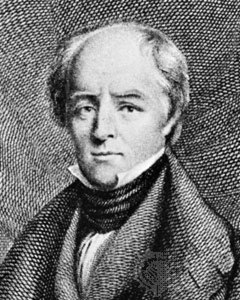
Autor
Basil Hall
Oficial de la Marina Real Británica
- Nacimiento
- 31 de diciembre de 1788, Edimburgo
- Muerte
- 11 de septiembre de 1844, Royal Hospital Haslar
- Nacionalidad
- Reino Unido de Gran Bretaña e Irlanda
- Ocupación
- Explorador, escritor y marino
Vida y obra
Wikipedia aún no tiene un artículo sobre este autor en este idioma. A continuación, el texto en inglés.
Basil Hall (31 December 1788 – 11 September 1844) was a British naval officer from Scotland, a traveller, and an author. He was the second son of Sir James Hall, 4th Baronet, an eminent man of science.
Early life
Although his family home was at Dunglass, Haddingtonshire (now East Lothian), Basil Hall was born in George Square, Edinburgh, at his aunt's house. He was educated at the Royal High School and joined the Royal Navy in 1802, being commissioned a Lieutenant in 1808, and later rising to the rank of captain.
Hall served aboard many vessels involved in exploration and scientific and diplomatic missions. From the beginning of his naval career he had been encouraged by his father to keep a journal, which later became the source for a series of books and publications describing his travels.
Service in the Napoleonic Wars
While serving aboard HMS Endymion, Hall witnessed Sir John Moore being carried dying from the Battle of Corunna. It was also aboard the Endymion that Hall met William Howe De Lancey, who later married Hall's sister Magdalene. De Lancey was struck by a cannonball at the Battle of Waterloo, and it was for her brother that Magdalene wrote A Week at Waterloo in 1815, a poignant narrative describing how she nursed him in his final days.
In 1810, he voyaged to Rockall aboard the Endymion and in 1811 was part of the first landing party there. His hazardous exploits in returning with this party were described in Fragments of Voyages and Travels, first published in 1831.
Publication on the geology of the Cape of Good Hope
In 1813, Hall published, along with Professor John Playfair a description of the granitic intrusions within the sedimentary sandstone structures that he saw in the Platteklip Gorge near the Table Mountain in the Cape of Good Hope. The phenomenon was re-examined at another location called as the Green Point Contact by Charles Darwin in 1836.
Texto: “Basil Hall (Royal Navy officer, born 1788)”, de Wikipedia, la enciclopedia libre, bajo la licencia CC BY-SA 4.0. Fechas y datos: Wikidata.
Acervo
Libros de Basil Hall
1 libro