Wikipedia aún no tiene un artículo sobre este autor en este idioma. A continuación, el texto en inglés.
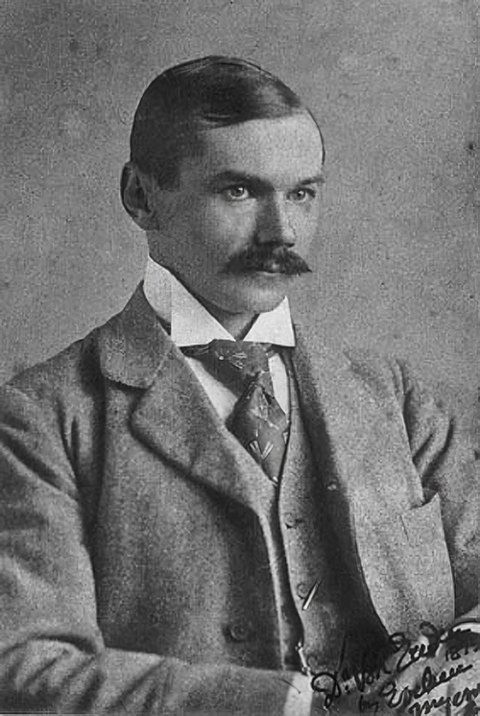
Frederik Willem van Eeden (3 April 1860, Haarlem – 16 June 1932, Bussum) was a Dutch writer and psychiatrist. He was a leading member of the Tachtigers and the Significs Group, and had top billing among the editors of De Nieuwe Gids (The New Guide) during its celebrated first few years of publication, starting in 1885. Van Eeden adopted vegetarianism in 1890 for health reasons, later promoting it as an ethical stance in works like Het Vegetariaat (1896), but gradually distanced himself from it in the early 20th century as his philosophical views shifted.
Biography
Van Eeden was the son of Frederik Willem van Eeden, director of the Royal Tropical Institute in Haarlem.
In 1880 he studied medicine in Amsterdam, where he pursued a bohemian lifestyle and wrote poetry. Whilst living in the city, he coined the term lucid dream in the sense of mental clarity, a term that nowadays is a standard term in the study of dreams, meaning dreaming while knowing that one is dreaming. In his early writings, he was strongly influenced by Hindu ideas of selfhood, by Boehme's mysticism, and by Fechner's panpsychism.
He went on to become a prolific writer, producing many critically acclaimed novels, poetry, plays, and essays. He was widely admired in the Netherlands in his own time for his writings, as well as his status as the first internationally prominent Dutch psychiatrist.
Van Eeden's psychiatrist practice included treating his fellow Tachtiger Willem Kloos as a patient starting in 1888. His treatment of Kloos was of limited benefit, as Kloos deteriorated into alcoholism and increasing symptoms of mental illness. Van Eeden also incorporated his psychiatric insights into his later writings, such as in a deeply psychological novel called "Van de koele meren des doods" (translated in English as "The Deeps of Deliverance"). Published in 1900, the novel intimately traced the struggle of a woman addicted to morphine as she deteriorated physically and mentally.