Wikipedia aún no tiene un artículo sobre este autor en este idioma. A continuación, el texto en inglés.
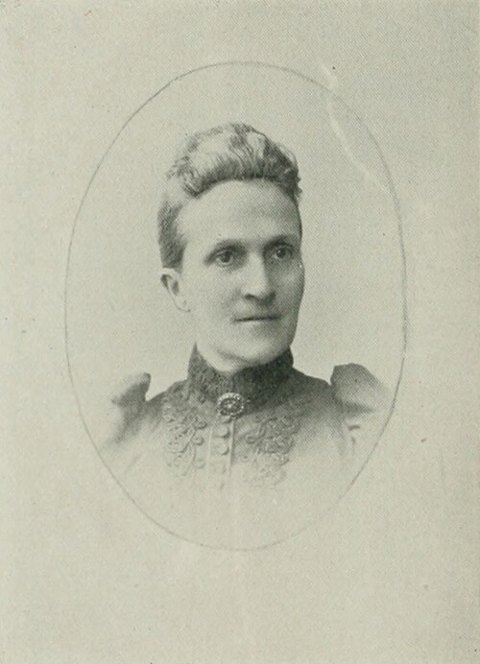
Harriet Earhart Monroe (August 21, 1842 – July 17, 1927) was an American lecturer, educator, writer, and traveling producer of religious stage plays. She was also well known for her work in Christian psychology and theology. One of her plays was being performed during the Rhoads Opera House fire.
Monroe lectured in large auditoriums from Boston to Omaha, and in the South Atlantic states. She was an active worker in city gospel mission work, in her own church, and in associated charities. She wrote a weekly letter to the Lutheran Observer (Philadelphia and Lancaster, Pennsylvania). Monroe favored woman suffrage.
Early years and education
Harriet Earhart was born in Indiana, Pennsylvania, August 21, 1842. She was the daughter of Rev. David Earhart and Mary W. (Patton) Earhart, of Atchison, Kansas. Her father, a Lutheran minister, went to Kansas as a missionary in 1860. Her siblings were Della E. Earhart Mayers (1857–1908) and Samuel Stanton Earhart (1867–1930).
She was educated by private tutors.
Career
Monroe was a teacher in Kansas when the Civil War broke out, and during that conflict, she went to Clinton, Iowa, where she taught until peace was restored. She returned to Kansas and in 1865, married A. Q. Monroe. Her only daughter, Mabel, died in infancy, and her only son, Eugene E., became president of the Atchinson (Kansas) College Institute (1870–85). In 1870, thrown upon her own resources, she opened a private school in Atchison, which grew rapidly into a collegiate institute with over 200 students in regular attendance. During her thirteen years in that school, she had 2,621 students under her charge. In 1885, her health failed and she was compelled to give up the school.




![Portada de Washington, its sights and insights [1903]](/uploads/covers/29bfaab7f01d48f7a00a61ef0d47b63b.jpg)