Autor
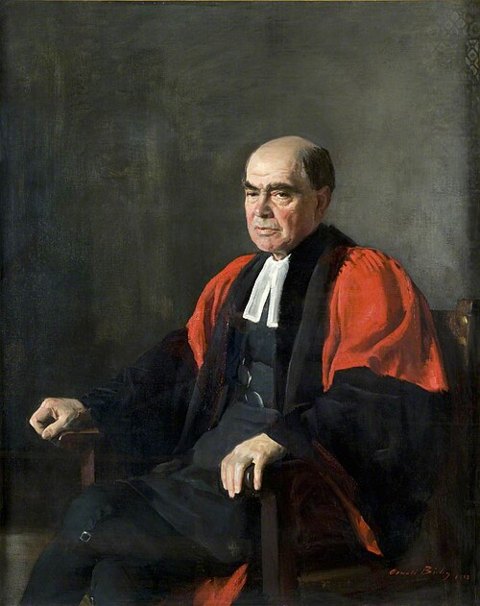
Hastings Rashdall
Filósofo británico
- Nacimiento
- 24 de junio de 1858, Londres
- Muerte
- 9 de febrero de 1924, Worthing
- Nacionalidad
- Reino Unido de Gran Bretaña e Irlanda
- Ocupación
- Historiador, filósofo y teólogo
Vida y obra
Wikipedia aún no tiene un artículo sobre este autor en este idioma. A continuación, el texto en inglés.
Hastings Rashdall (24 June 1858 – 9 February 1924) was an English philosopher, theologian, historian, and Anglican priest. He expounded a theory known as ideal utilitarianism, and he was a major historian of the universities of the Middle Ages. He argued for personal idealism and theistic finitism.
Biography
Born in Kensington, London, on 24 June 1858, Rashdall was the son of an Anglican priest. He was educated at Harrow and received a scholarship for New College, Oxford. After short tenures at St David's University College and University College, Durham, Rashdall was made a Fellow of first Hertford College, Oxford, then New College, Oxford, and dedicates his main work, The Theory of Good and Evil (1907), to the memory of his teachers T. H. Green and Henry Sidgwick.
The dedication is appropriate, for the particular version of utilitarianism put forward by Rashdall owes elements to both Green and Sidgwick. Whereas he holds that the concepts of good and value are logically prior to that of right, he gives right a more than instrumental significance. His idea of good owes more to Green than to the hedonistic utilitarians. "The ideal of human life is not the mere juxtaposition of distinct goods, but a whole in which each good is made different by the presence of others." Rashdall has been eclipsed as a moral philosopher by G. E. Moore, who advocated similar views in his earlier work Principia Ethica (1903). Rashdall was also a Berkeleyan and advocated his own variant of personal idealism. He rejected absolute idealism and criticised other philosophers who identified God with the absolute. He argued that there can be no matter without a perceiving mind and that God is an infinite mind, ground of all things and the supreme personality. He argued for an anthropomorphic God that is limited in power to explain the problem of evil.
Texto: “Hastings Rashdall”, de Wikipedia, la enciclopedia libre, bajo la licencia CC BY-SA 4.0. Fechas y datos: Wikidata.
Acervo
Libros de Hastings Rashdall
1 libro