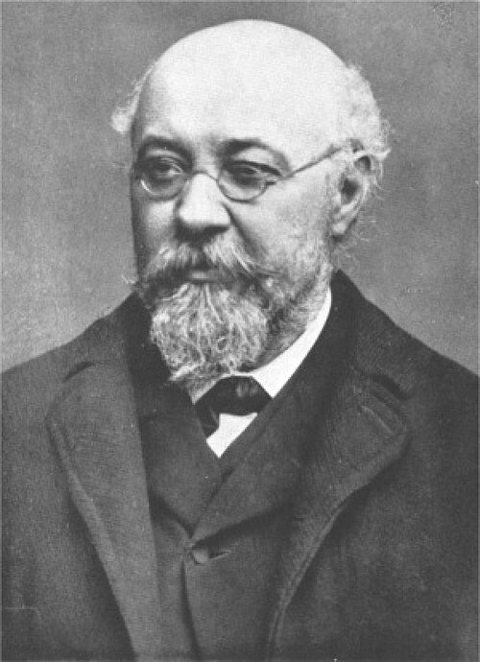
Autor
Jakub Arbes
1840–1914
- Nacimiento
- 12 de junio de 1840, Smíchov
- Muerte
- 8 de abril de 1914, Smíchov
- Nacionalidad
- Imperio austrohúngaro y Imperio austríaco
- Ocupación
- Traductor, periodista, escritor de ciencia ficción, escritor y político
Vida y obra
Wikipedia aún no tiene un artículo sobre este autor en este idioma. A continuación, el texto en inglés.
Jakub Arbes (12 June 1840, in Prague (Smíchov) – 8 April 1914) was a Czech writer and intellectual. He is best known as the creator of the literary genre called romanetto and spent much of his professional life in France.
Life and politics
A native of Smíchov in Prague, Arbes studied under Jan Neruda, for whom he had a lifelong admiration, and later he studied Philosophy and Literature at Prague Polytechnic. In 1867, he began his career in journalism as editor of Vesna Kutnohorská, and from 1868 to 1877, as the chief editor of the National Press. Arbes was also an editor of political magazines Hlas (The Voice) and Politiks (Politics), and a sympathizer of the Májovci literary group. During this time, Arbes was persecuted and spent 15 months in the Czech Lipa prison, for leading opposition to the ruling Austro-Hungarian Empire. He left Prague soon after, spending time in Paris and the South of France as part of the intellectual community there. In France, he was an associate of other "Bohemian Parisiens" such as Paul Alexis, Luděk Marold, Guy de Maupassant, Viktor Oliva, and Karel Vítězslav Mašek, as well as the French writer Émile François Zola.
Writer
Arbes worked with contemporary writers including Jiří Karásek ze Lvovic, Josef Svatopluk Machar and his mentor Jan Neruda, and was influenced by the English-language writers Lord Byron and Edgar Allan Poe. He translated many of Poe's writings into French and Czech, and named his son Edgar. Arbes was also strongly influenced by Émile Zola's theory of the experimental novel. Arbes wrote about the urban working classes and promoted his ideas of utopian socialism. His work incorporates the themes of moral justice, free thinking and rationalism, and also featured autobiographical elements. His characters were often creative and rebellious free-thinkers, whose intellectual abilities made them independent, but were eventually destroyed by non-conformism.
Texto: “Jakub Arbes”, de Wikipedia, la enciclopedia libre, bajo la licencia CC BY-SA 4.0. Fechas y datos: Wikidata.
Acervo
Libros de Jakub Arbes
1 libro