Wikipedia aún no tiene un artículo sobre este autor en este idioma. A continuación, el texto en inglés.
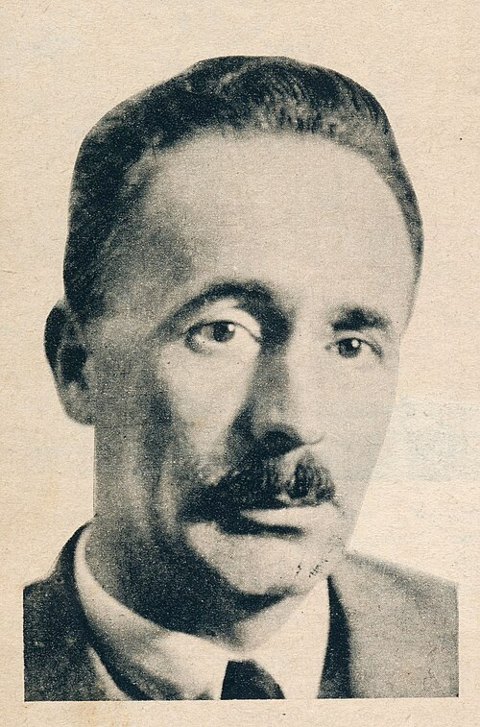
József Nyírő (July 18, 1889 – October 16, 1953) was a Hungarian writer of popular short stories and novels; a politician associated with fascism who was accused of war crimes; and briefly a Catholic priest in Miluani.
Biography
Nyírő was born July 18, 1889, in the village of Székelyzsombor, Udvarhely County, Kingdom of Hungary (today Jimbor, Brașov County). He was ordained in 1912, taught theology in Nagyszeben (today Sibiu), and became a priest in 1915. He left the priesthood in 1919 and married, operating a grist mill for a time. He then found success publishing short stories in magazines and newspapers and worked as a journalist for 10 years. In 1931 he inherited a farm estate and took it over.
Nyirő's political career is considered as controversial. He was a great admirer of Joseph Goebbels and was a member of the Fascist 'Arrow-Cross caucus' of the Arrow Cross Party. Nyírő joined the "Europäische Schriftstellervereinigung" (i.e., European Writers' League) founded by Joseph Goebbels. He became the speaker of Hungarian section of the European Writers' League before that position went to Lőrinc Szabó. After the Second Vienna Award of 1940, Nyírő joined the Hungarian parliament as a member of the extreme right-wing, antisemitic Transylvanian Party. In a 1942 speech, he referred to Jews as "well-poisoners" who "destroy the Hungarian soul, who infect our spirit," and declared that "This concept of the rundown liberal Jewish tradition, this veiled propaganda, must disappear from Hungarian life." In 1944, the Arrow Cross Party massacred over 10,000 Jews in Budapest. Throughout this period, Nyírő was editor of the right-wing publication Magyar Erő (Hungarian Might) and remained in the Arrow Cross parliament. After the war, he was charged with war crimes by Romania and Hungary; he fled to West Germany and died of cancer in Francisco Franco's Spain, where many fascists and Nazis found exile.