Wikipedia aún no tiene un artículo sobre este autor en este idioma. A continuación, el texto en inglés.
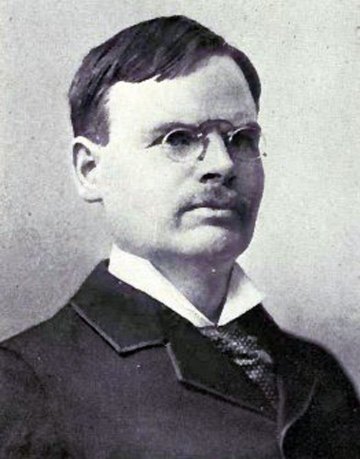
William Wilfred Campbell (1 June c. 1860 – 1 January 1918) was a Canadian poet. He is often categorized as one of the country's Confederation Poets, a group that included Charles G.D. Roberts, Bliss Carman, Archibald Lampman, and Duncan Campbell Scott; he was a colleague of Lampman and Scott. By the end of the 19th century, he was considered the "unofficial poet laureate of Canada." Although not as well known as the other Confederation poets today, Campbell was a "versatile, interesting writer" who was influenced by Robert Burns, the English Romantics, Edgar Allan Poe, Ralph Waldo Emerson, Henry Wadsworth Longfellow, Thomas Carlyle, and Alfred Tennyson. Inspired by these writers, Campbell expressed his own religious idealism in traditional forms and genres.
Life
William Wilfred Campbell was born around 1 June circa 1860 in Berlin, Canada West, now Kitchener, Ontario. His father, Rev. Thomas Swainston Campbell, was an Anglican clergyman who had been assigned the task of setting up several frontier parishes in "Canada West", as Ontario was then called. Consequently, the family moved frequently.
The Campbell family settled in Wiarton, Ontario in 1871, where Wilfred grew up, attending high school (which was later renamed the Owen Sound Collegiate and Vocational Institute) in nearby Owen Sound. At that time he also conducted a choir. Campbell would look back on his childhood with fondness:
As a boy, I always enjoyed the campfires we built in the woods or on the shingly beach of some lone lake shore, when the stars came out and peered down on the windy darkness and swallowed up the sparks and flames from the crackling logs and dry branches we heaped up while the local warmth and radiance added a contrast to the outside vastness of darkness and cold.