Autor
William Apess
1798–1839
- Nacimiento
- 1798
- Muerte
- 1839, Nueva York
- Nacionalidad
- Estados Unidos
- Ocupación
- Escritor, ministro, predicador y autor
- Obras destacadas
- A Son of the Forest
Vida y obra
Wikipedia aún no tiene un artículo sobre este autor en este idioma. A continuación, el texto en inglés.
William Apess (1798–1839, Pequot) (also known as William Apes before 1837), was a Methodist minister, writer, and activist of mixed-race descent. Apess spent most of his career in New England.
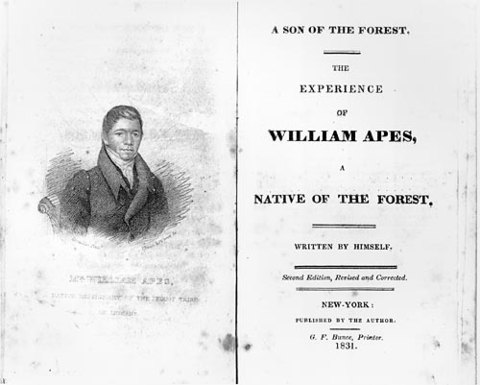
In 1829 he published A Son of the Forest, one of the first autobiographies by a Native American writer. Apess was part Pequot by descent, especially through his mother's family, and identified with their culture. Later in life, he was adopted by the Mashpee tribe.
In recent decades, Apess's works have been frequently anthologized in collections of American literature, alongside other early American Native writers like Samson Occom and Jane Johnston Schoolcraft. Apess has been described as "perhaps the most successful activist on behalf of Native American rights in the antebellum United States."
Early life
William Apess was born in 1798 in Colrain in northwestern Massachusetts to William and Candace Apess of the Pequot tribe. According to his autobiography, his father was mixed Pequot and European American, as Apess' white paternal grandfather had married a Pequot woman. He claimed descent from King Philip through his mother, who also had some European-American and African-American ancestry. Until the age of five, Apess lived with his family, including two brothers and two sisters, near Colrain.
His parents separated, and the five children were cared for by their maternal grandparents. But they were abusive and suffered from alcoholism. After seeing continued abuse, a neighbor intervened with the town selectmen on behalf of the children. They were taken away for their own safety and indentured to European-American families. Then five-year-old Apess was cared for by his neighbor, Mr. Furman, for a year until he had recovered from injuries sustained while living with his grandparents. His autobiography does not mention any contact with his Pequot relatives for the rest of his childhood. He said that he did not see his mother for twenty years after the beating. In contrast, he grew to love his adopted family dearly, despite his status as an indentured servant. When Mrs. Furman's mother died, he writes that "She had always been so kind to me that I missed her quite as much as her children, and I had been allowed to call her mother." Apess was sent to school during the winter for six years to gain an education, while also assisting Furman at work. Mrs. Furman, a Baptist, gave William his first memorable experience with Christianity when he was six, and she discussed with him the importance of going to heaven or hell. Even as a young child, his devotion was ardent. He describes the joy he gained from sermons, and the depression he suffered when Mr. Furman eventually forbade him from attending.
Texto: “William Apess”, de Wikipedia, la enciclopedia libre, bajo la licencia CC BY-SA 4.0. Fechas y datos: Wikidata.
Acervo
Libros de William Apess
1 libro