Wikipedia aún no tiene un artículo sobre este autor en este idioma. A continuación, el texto en inglés.
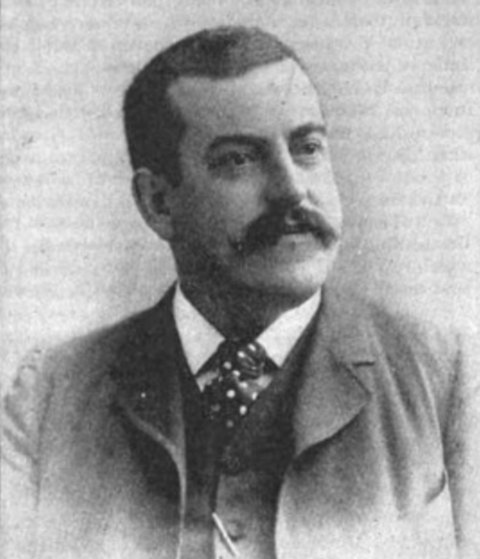
William Eleroy Curtis (November 5, 1850 – October 5, 1911) was an American journalist, author, diplomat, political activist, and exhibitor. He was a prominent proponent of Pan-Americanism. Curtis' partisan reporting earned him patronage appointments and advanced his ideological goals. His career reflected the influence of bias, cronyism, and imperialism on journalism during the Gilded Age. Curtis held a series of leadership roles in the State Department, as well as the supranational organizations which anticipated the Organization of American States.
Early life
Curtis was born on November 5, 1850, in Akron, Ohio, the second son of Eleroy Curtis, a Presbyterian minister, and Harriet Eliza Coe. Harriet was the daughter of Reverend Harvey Coe, the first elected trustee of Western Reserve College. After graduating from high school in Clinton, New York, Curtis attended Western Reserve College. While a freshman, he applied for a typesetter position at The Cleveland Leader, but was assigned reporting work instead. Curtis graduated with a Bachelor of Arts in 1871. Curtis worked for the Erie Dispatch in 1871, followed by the Toledo Commercial in 1872.
Chicago Inter-Ocean
In 1873, he joined the reporting staff of the Chicago Inter-Ocean. Embedded with George Armstrong Custer's 7th Cavalry during the 1874 Black Hills Expedition, Curtis was widely credited as the first to report the discovery of gold in the Dakota Territory; this revelation precipitated the Black Hills Gold Rush. His adamant praise of Custer contributed to the officer's popular image as a tragic hero who furthered the "manifest destiny" of the United States.