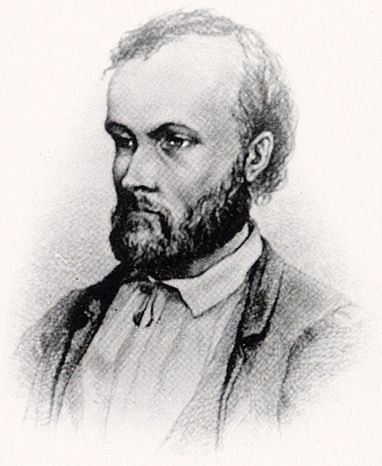
Aleksis Kivi (Finnish pronunciation: [ˈɑleksis ˈkiʋi]; born Alexis Stenvall; 10 October 1834 – 31 December 1872) was a Finnish writer who wrote the first significant novel in the Finnish language, Seitsemän veljestä (Seven Brothers), published in 1870. He is also known for his 1864 play, Nummisuutarit (Heath Cobblers).
Although Kivi was among the very earliest writers of prose and lyrics in Finnish, he is still considered one of the greatest, who has compared to "the Finnish equivalent of Goethe, Dickens and Twain" by the English translator Douglas Robinson. Kivi is regarded as the national writer of Finland and his birthday, 10 October, is celebrated as Finnish Literature Day.
Life
Aleksis Stenvall was born in Palojoki village, Nurmijärvi, Grand Duchy of Finland. His parents were the village tailor Erik Johan Stenvall (1798–1866) and Anna-Kristiina Hamberg (1793–1863). Aleksis had three older brothers – Johannes, Emanuel, and Albert – and a younger sister, Agnes, who died in 1851 at the age of 13. Kivi's great-uncle Matts Stenvall was a member of the infamous "Nurmijärvi robbers".
In 1846, Kivi left for school in Helsinki. In 1859, he was accepted into the University of Helsinki, where he studied literature and developed an interest in the theatre. His first play was Kullervo (1860), based on a tragic tale from the Kalevala, Finland's national epic. He also met the famous journalist and statesman Johan Vilhelm Snellman who became his supporter.
During his time at school Kivi read world literature from the library of his landlord, and during his university studies, he saw plays by Molière and Schiller at the Swedish Theatre in Helsinki. Kivi also became friends with Fredrik Cygnaeus and Elias Lönnrot.