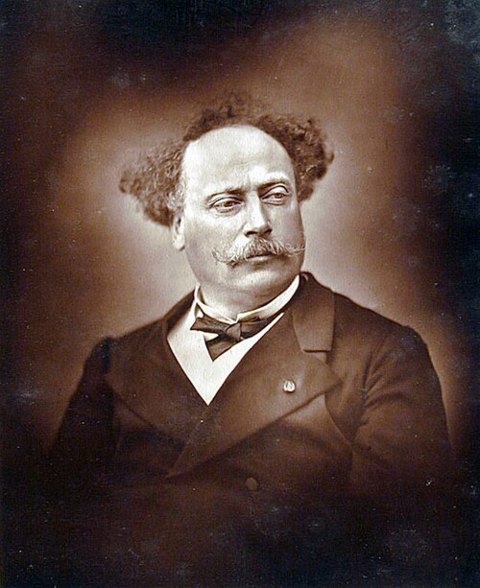
Alexandre Dumas fils (French: [alɛksɑ̃dʁ(ə) dymɑ fis]; 27 July 1824 – 27 November 1895) was a French author and playwright, best known for the romantic novel La Dame aux Camélias (The Lady of the Camellias, usually titled Camille in English-language versions), published in 1848, which was adapted into Giuseppe Verdi's 1853 opera La traviata (The Fallen Woman), as well as numerous stage and film productions about father-son relationships, such as Le Fils naturel and Un Père prodigue.
Dumas fils (French for "son") was the son of Alexandre Dumas père ("father"), also a well-known playwright and author of classic works such as The Three Musketeers and The Count of Monte Cristo. Dumas fils was admitted to the Académie française (French Academy) in 1874 and awarded the Legion of Honour in 1894.
Biography
Dumas was born in Paris, France, the illegitimate child of Marie-Laure-Catherine Labay (1794–1868), a dressmaker, and novelist Alexandre Dumas. In 1831 his father legally recognized him and ensured that the young Dumas received the best education possible at the Collège Bourbon. At that time, the law allowed the elder Dumas to take the child away from his mother. Her agony inspired the younger Dumas to write about tragic female characters. In almost all of his writings, he emphasized the moral purpose of literature; in his play Le Fils Naturel (1858) he espoused the belief that if a man fathers an illegitimate child, then he has an obligation to legitimize the child and marry the woman (see Illegitimacy in fiction). At boarding schools, he was constantly taunted by his classmates because of his family situation. These issues profoundly influenced his thoughts, behaviour, and writing.