Author
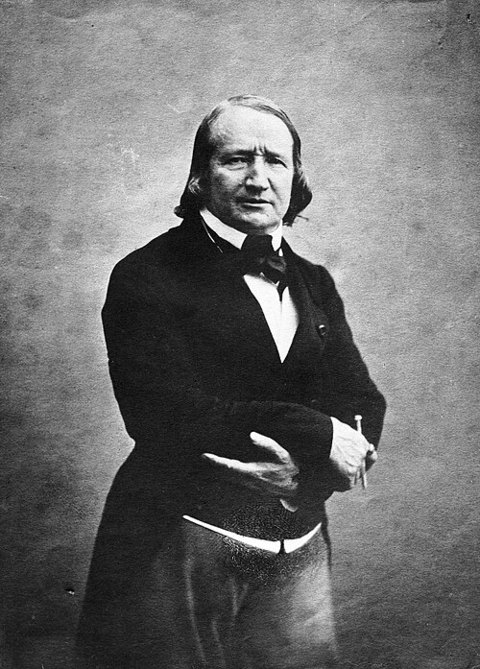
Alfred de Vigny
French poet, playwright, and novelist (1797–1863)
- Born
- March 27, 1797, Loches
- Died
- September 17, 1863, rue d'Artois
- Nationality
- France
- Occupation
- Writer, playwright, poet, novelist and diarist
- Movement
- Romanticism
- Notable works
- Poèmes antiques et modernes · Cinq-Mars · Chatterton · Stello · Servitude et grandeur militaires
Life and work
Alfred Victor, Comte de Vigny (French pronunciation: [alfʁɛd viktɔʁ kɔ̃t də viɲi]; 27 March 1797 – 17 September 1863) was a French poet and an early French Romanticist. He also produced novels, plays, and translations of Shakespeare.
Biography
Vigny was born in Loches (a town to which he never returned) to an aristocratic family. His father was a 60-year-old veteran of the Seven Years' War who died before Vigny's 20th birthday; his mother, 20 years younger, was a strong-willed woman who was inspired by Rousseau and took personal responsibility for Vigny's early education. His maternal grandfather, the Marquis de Baraudin, had served as commodore with the royal navy.
Vigny grew up in Paris, and attended preparatory studies for the École Polytechnique at the Lycée Bonaparte, obtaining a good knowledge of French history and the Bible before developing an "inordinate love for the glory of bearing arms".
As was the case for every noble family, the French Revolution diminished the family's circumstances considerably. After Napoléon's defeat at Waterloo, a Bourbon, Louis XVIII, the brother of Louis XVI, was restored to authority, and in 1814 Vigny enrolled in one of the privileged aristocratic companies of the Maison du Roi (king's guard) as a second lieutenant.
Though he was promoted to first lieutenant in 1822 and to captain the next year, the military profession in time of peace bored him. After taking several leaves of absence he abandoned military life during 1827, having already published his first poem Le Bal during 1820 and an ambitious narrative poem Éloa in 1824 on the popular romantic theme of the redemption of Satan.
Text: “Alfred de Vigny”, from Wikipedia, the free encyclopedia, under the license CC BY-SA 4.0. Dates and facts: Wikidata.
Collection
Books by Alfred de Vigny
1 book