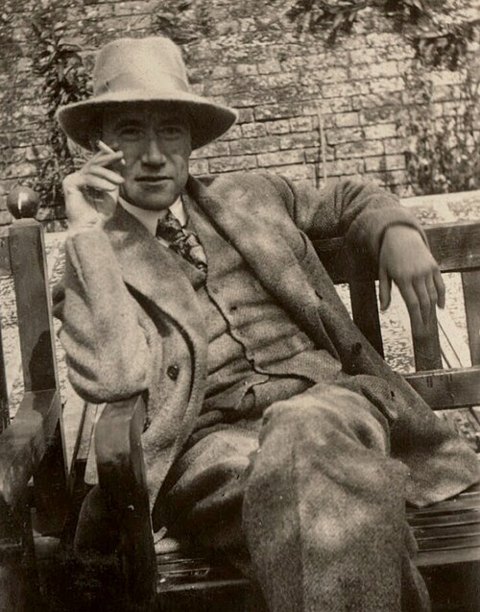
André Paul Guillaume Gide (French: [ɑ̃dʁe pɔl ɡijom ʒid]; 22 November 1869 – 19 February 1951) was a French author whose writing spanned a wide variety of styles and topics. He was awarded the 1947 Nobel Prize in Literature. Gide's career ranged from his beginnings in the symbolist movement to criticising imperialism in the interwar period. Author of more than 50 books, he was described in his obituary in The New York Times as "France's greatest contemporary man of letters" and "judged the greatest French writer of this century by the literary cognoscenti."
Known for his fiction as well as his autobiographical works, Gide expressed the conflict and eventual reconciliation of the two sides of his personality (characterized by a Protestant austerity and a transgressive sexual adventurousness, respectively). As a self-professed pederast, he used his writing to explore his struggle to be fully oneself, including owning one's sexual nature, without betraying one's values. His political activity was shaped by the same ethos. While sympathetic to Communism in the early 1930s, like many intellectuals, after his 1936 journey to the USSR he supported the anti-Stalinist left. Towards the end of his life, in the 1940s, he shifted towards more traditional values and repudiated Communism as an idea that breaks with the traditions of Christian civilization.