Author
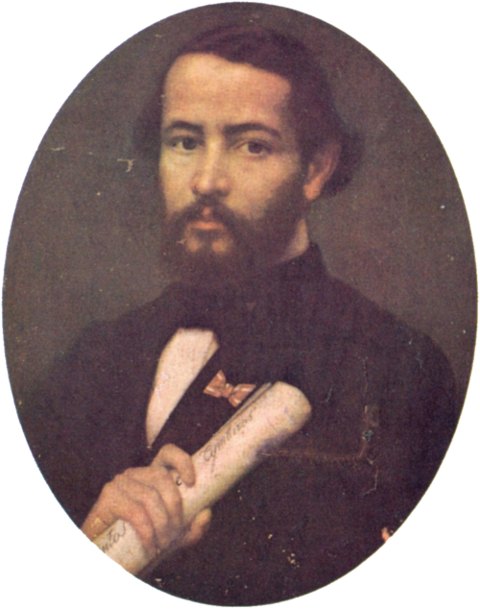
Antônio Gonçalves Dias
Brazilian poet and dramatist (1823–1864)
- Born
- August 10, 1823, Caxias
- Died
- November 3, 1864, Guimarães
- Nationality
- Empire of Brazil
- Occupation
- Playwright, poet, writer, theatrologist and journalist
- Movement
- Romanticism in Brazil and artistic indianism
- Notable works
- Canção do exílio · I-Juca-Pirama
Life and work
Antônio Gonçalves Dias (Brazilian Portuguese pronunciation: [ɐ̃ˈtoni.u ɡõˈsawviz ˈdʒiɐs, ɐ̃ˈtonju -]; August 10, 1823 – November 3, 1864) was a Brazilian Romantic poet, playwright, ethnographer, lawyer and linguist. A major exponent of Brazilian Romanticism and of the literary tradition known as "Indianism", he is famous for writing "Canção do Exílio" (arguably the most well-known poem of Brazilian literature), the short narrative poem I-Juca-Pirama, the unfinished epic Os Timbiras, and many other nationalist and patriotic poems that would award him posthumously with the title of national poet of Brazil. He was also an avid researcher of Native Brazilian languages and folklore.
He is the patron of the 15th chair of the Brazilian Academy of Letters.
Biography
Antônio Gonçalves Dias was born in Caxias on August 10, 1823, to a Portuguese father, João Manuel Gonçalves Dias and a cafuza mother, Vicência Ferreira. After completing his studies in Latin, French and Philosophy, he went in 1838 to Portugal to earn a degree in Law at the University of Coimbra. There he wrote his most remembered poem, "Canção do exílio". He graduated in 1845 and returned to Brazil in the same year. He went to Rio de Janeiro, living there until 1854. There he wrote for newspapers, and began to write the drama Leonor de Mendonça in 1846 and his first poetry book, Primeiros Cantos, in 1847. It was very well-received, and Alexandre Herculano wrote an article praising it. Dias finished his play Leonor de Mendonça also in 1847, and tried to have it performed at the Conservatório de Música do Rio de Janeiro, but the play was not accepted.
Text: “Gonçalves Dias”, from Wikipedia, the free encyclopedia, under the license CC BY-SA 4.0. Dates and facts: Wikidata.
Collection
Books by Antônio Gonçalves Dias
1 book