Author
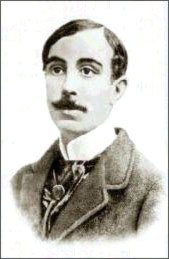
António Nobre
Portuguese poet (1867–1900)
- Born
- August 16, 1867, Porto
- Died
- March 18, 1900, Porto
- Nationality
- Kingdom of Portugal
- Occupation
- Poet and writer
- Movement
- Decadent movement
Life and work
António Pereira Nobre (16 August 1867 – 18 March 1900) was a Portuguese poet. The book Só (Paris, 1892), was the only book he published.
Northern Portugal
Nobre was a member of a wealthy family. He was born in Porto, and spent his childhood in Trás-os-Montes and in Póvoa de Varzim.
Coimbra
He studied law unsuccessfully at the University of Coimbra from 1888 to 1890 when he dropped out. As a student in Coimbra, and according to his own words, he only felt at ease in his "tower" (referring to the Torre de Anto - Anto Tower, in upper Coimbra, where he lived) during the "sinister period" he spent studying law at the University of Coimbra. An unknown fiancée, more fictitious than concrete; a friend — Alberto de Oliveira, and a brief intervention in the literary life, through some magazines, did not conciliate him with the academic city of Coimbra where this predestined poet flunked twice.
Paris
He went to Paris, where he earned a degree in political science at the École Libre des Sciences Politiques. There, he came in contact with the French coeval poetry — he met Paul Verlaine and Jean Moréas, among others. He also met the famous Portuguese writer Eça de Queiroz in Paris, who was a Portuguese diplomat in the city. From 1890 to 1895, Nobre studied political science in Paris, where he was influenced by the French Symbolist poets and it was there that he wrote the greater part of the only book he published.
The Paris exile, sad by his own words ("poor Lusitanian, the wretched", lost in the crowd that does not know him), was not a time for happiness. The aristocratic shutting up caused nausea or indifference. Frustrated and always marginal experiences made him bitter. He was far from the sweat and from all sorts of fraternity, from desire and hate, and from the wailing of the breed, a childlike, lost, instinctive and princely life, a souvenir of the sweet old landscape that memory seems to encourage. In his mourning, Nobre considered himself a doomed poet, with a hard soul and a maiden's heart, which carried the sponge of gall in former processions.
Text: “António Nobre”, from Wikipedia, the free encyclopedia, under the license CC BY-SA 4.0. Dates and facts: Wikidata.
Collection
Books by António Nobre
1 book