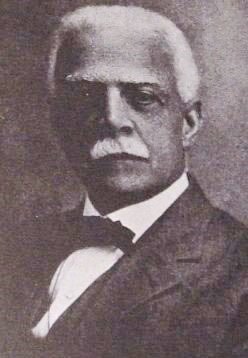
Archibald Henry Grimké (August 17, 1849 – February 25, 1930) was an African-American lawyer, intellectual, journalist, diplomat and community leader in the 19th and early 20th centuries. He graduated from freedmen's schools, Lincoln University in Pennsylvania, and Harvard Law School, and served as American Consul to the Dominican Republic from 1894 to 1898. He was an activist for the rights of Black Americans, working in Boston and Washington, D.C. He was a national vice-president of the National Association for the Advancement of Colored People (NAACP), as well as president of its Washington, D.C. chapter.
Early life and education
Grimké was born into slavery on his father's plantation near Charleston, South Carolina, in 1849. He was the eldest of three sons of Henry W. Grimké, a widower, and Nancy Weston, a very intelligent enslaved woman, crippled in one arm, who had been born into slavery as the daughter of an enslaved African woman; her father is unknown. Henry acknowledged his sons, although he neither freed them nor told the rest of his family of their existence. Archibald's brothers were Francis and John. Henry was a member of a prominent, sizeable family of enslavers in Charleston. His father and relatives were planters active in political and social circles.
After becoming a widower, Henry moved with Weston to a plantation, Cane Acre, 25 miles outside of Charleston. A modern scholar speculates that the move was motivated by Henry's desire to enjoy his relationship with Nancy free from the eyes of Charleston's white community. He was a father to his sons, teaching them and Nancy to read and write. In 1852, as he was dying, Henry willed Nancy, who was pregnant with their third child, and their two sons Archibald and Francis to his legal (white) son and heir Montague Grimké, whose mother was Henry's deceased wife. Henry was prohibited from freeing them by a South Carolina law passed in 1841 that did not allow for the release of enslaved people through gifts or trusts. He directed that they "be treated as members of the family," but Montague never provided well for them.