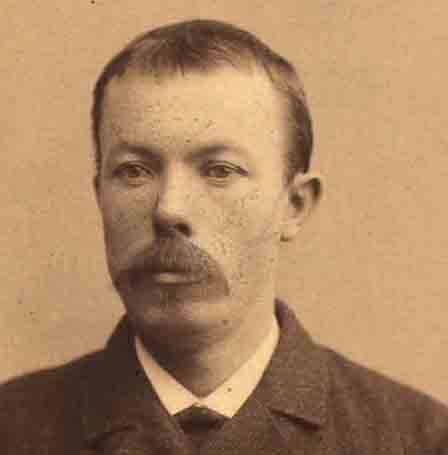
Arne Garborg (born Aadne Eivindsson Garborg) (25 January 1851 – 14 January 1924) was a Norwegian writer.
Garborg championed the use of Landsmål (now known as Nynorsk, or New Norwegian), as a literary language; he translated the Odyssey into it. He founded the weekly Fedraheimen in 1877, in which he urged reforms in many spheres including political, social, religious, agrarian, and linguistic. He was married to Hulda Garborg.
Life and career
Garborg grew up on a farm named Garborg, near the village of Undheim in Time Municipality in the Jæren district of Rogaland county. He grew up together with eight siblings. Although he was to become known as an author, it was as a newspaperman that he got his start. In 1872 he established the newspaper Tvedestrandsposten, and in 1877 the Fedraheimen, which he served as managing editor until 1892. In the 1880s he was also a journalist for the Dagbladet. In 1894 he laid the ground, together with Rasmus Steinsvik, for the paper Den 17de Mai; which changed its name to Norsk Tidend in 1935. As of 1898 Garborg was among the contributors of Ringeren, a political and cultural magazine established by Sigurd Ibsen.
His novels are profound and gripping while his essays are clear and insightful. He was never inclined to steer clear of controversy. His work tackled the issues of the day, including the relevance of religion in modern times, the conflicts between national and European identity, and the ability of the common people to actually participate in political processes and decisions.