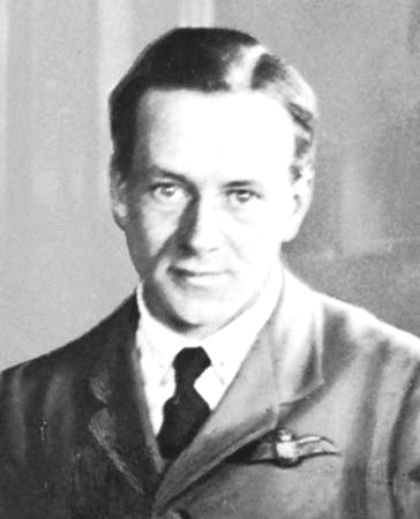
Lieutenant-Colonel Sir Arthur Whitten Brown, (23 July 1886 – 4 October 1948) was a British military officer and aviator who flew as navigator of the first successful non-stop transatlantic flight with pilot John Alcock in June 1919.
Biography
Arthur Whitten Brown was born in Glasgow to American parents; his father had been sent to Scotland to evaluate the feasibility of siting a Westinghouse factory on Clydeside. His father, Arthur George, was an electrical engineer, After his birth, the family moved to Chorlton, and lived at 'Ellerslie', 6 Oswald Rd.
The factory was eventually sited in Trafford Park in Stretford, Manchester, and the family subsequently relocated there.
Both of the Atlantic pilots attended the Central High School for Boys, mostly known as Manchester Central High School. Alcock left at 16.
Brown began his career in engineering before the outbreak of World War I and undertook an apprenticeship with British Westinghouse in Manchester. In 1914, he enlisted in the ranks of the University and Public Schools Brigade (UPS) for which he had to take out British citizenship. The ranks of the UPS were full of potential officers and Brown was one of those who sought a commission to become a Second Lieutenant in the 3rd (Reserve) Battalion, Manchester Regiment. After service in France, Brown was seconded to 2 Squadron Royal Flying Corps as an observer.
Brown's aircraft was shot down by anti-aircraft fire over Vendin-le-Vieil in France while on artillery observation duties. He was sent back to England to recuperate but returned only to be shot down again, this time with a punctured fuel tank, near Bapaume in B.E.2c (number 2673) on a reconnaissance flight on 10 November 1915. Brown and his pilot, 2nd Lt. H. W. Medlicott, were captured by the Germans. (In June 1918 Medlicott was shot by the Germans while attempting to escape for the fourteenth time). Later interned in Switzerland, Brown was repatriated in September 1917.