Nem én kiáltok
Online reading View book
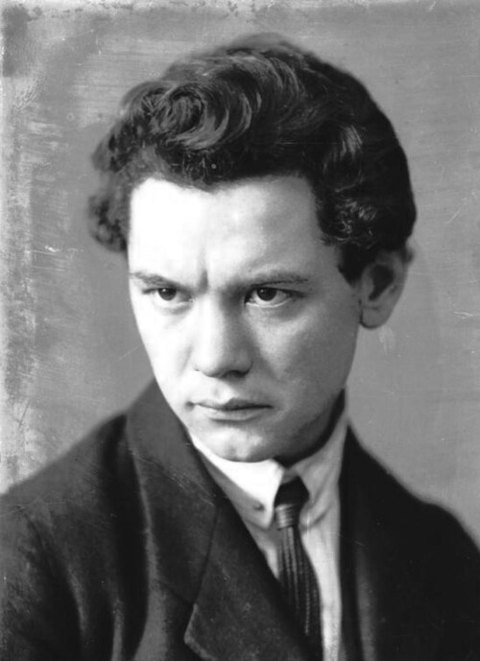
Author
Hungarian poet (1905–1937)
Attila József (11 April 1905 – 3 December 1937) was one of the most famous Hungarian poets of the 20th century. Generally not recognized during his lifetime, József was hailed during the communist era of the 1950s as Hungary's great "proletarian poet" and he has become the best known of the modern Hungarian poets internationally.
Attila József was born in Ferencváros, a poor district of Budapest, in 1905 to Áron József, a soap factory worker of Székely and Romanian origin from Banat, and Borbála Pőcze, a Hungarian peasant girl with Cuman ancestry; he had two elder sisters, Eta and Jolán. When Attila was three years old, he was sent to live with foster parents after his father abandoned the family and his mother became ill. At the time of his birth, Attila was not a well known name; because of this, his foster parents called him Pista, a nickname for the Hungarian version of Stephen.
From ages seven to fourteen, Attila returned to living with his mother until she died of cancer in 1919, aged only 43. While also attending school, he worked many odd jobs and was a self-described street urchin. After the death of his mother, the teenage Attila was looked after by his brother-in-law, Ödön Makai, who was relatively wealthy and could pay for his education in a good secondary school.
In 1924, Attila entered Franz Joseph University to study Hungarian and French literature, with the intention of becoming a secondary school teacher. He was expelled from the university, deemed unfit to be a teacher, after he wrote the provocative and revolutionary poem, Tiszta szívvel ("With a pure heart" or "With all my heart"). With his manuscripts, he traveled to Vienna in 1925 where he made a living by selling newspapers and cleaning dormitories, and then to Paris for the following two years, where he studied at the Sorbonne. During this period he read Hegel and Karl Marx, whose call for revolution appealed to him as well as the work of François Villon, the famous poet and thief from the 15th century. Financially, József was supported by the little money he earned by publishing his poems as well as by his patron, Lajos Hatvany. He returned to Hungary and studied at Pest University for a year. József then worked for the Foreign Trade Institute as a French correspondent and, later, was the editor of the literary journal Szép Szó (Beautiful Word.)
Text: “Attila József”, from Wikipedia, the free encyclopedia, under the license CC BY-SA 4.0. Dates and facts: Wikidata.
Collection
1 book