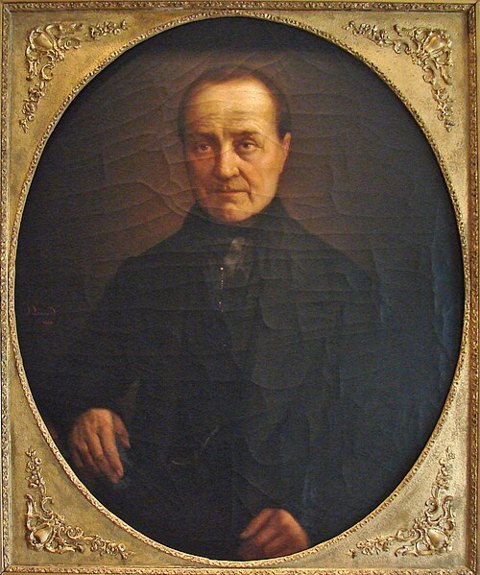
Isidore Auguste Marie François Xavier Comte (French: [oɡyst(ə) kɔ̃t]; 19 January 1798 – 5 September 1857) was a French philosopher and writer who formulated the doctrine of positivism. He is often regarded as the first philosopher of science in the modern sense of the term. Comte's ideas were fundamental to the development of sociology, as he coined the term and treated the discipline as the crowning achievement of the sciences.
Influenced by Henri de Saint-Simon, Comte's work attempted to remedy the social disorder caused by the French Revolution, which he believed indicated an imminent transition to a new form of society. He sought to establish a new social doctrine based on science, which he labeled positivism. He had a major impact on 19th-century thought, influencing the work of social thinkers such as John Stuart Mill and George Eliot. His concept of Sociology and social evolutionism set the tone for early social theorists and anthropologists such as Harriet Martineau and Herbert Spencer, evolving into modern academic sociology presented by Émile Durkheim as practical and objective social research.
Comte's social theories culminated in his "Religion of Humanity", which presaged the development of non-theistic religious humanist and secular humanist organizations in the 19th century. He may also have coined the word altruism.