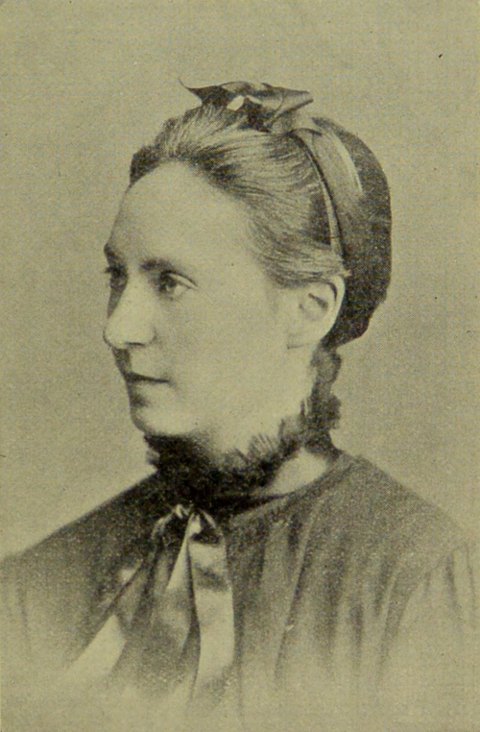
Beatrice Lindsay (3 October 1858 – 16 December 1917) was an English zoologist, writer, editor, and social reformer. She studied at Girton College, Cambridge, published "On the Avian Sternum" in 1885, and wrote the zoological books An Introduction to the Study of Zoology (1895) and The Story of Animal Life (1902). She was elected a Fellow of the Linnean Society in 1911.
Lindsay was active in the Vegetarian Society and edited its periodical, The Vegetarian Messenger, becoming the first woman to hold the post. Her vegetarian and zoological writings addressed diet reform, natural history, and the treatment of animals. She opposed painful experiments on animals, wrote for feminist publications, and supported women's suffrage.
Early life and education
Beatrice Lindsay was born on 3 October 1858 in Chorlton-on-Medlock, Manchester, to William Lindsay and Anne Lindsay (née Boddington).
Lindsay matriculated at Girton College, Cambridge, in 1880. She studied the Natural Sciences Tripos, receiving a Class II in Part I in 1883 and a Class III in the Moral Sciences Tripos in 1884.
Scientific career and writing
In 1885, Lindsay published "On the Avian Sternum" in the Proceedings of the Zoological Society of London. The paper argued that the keel of carinate birds was not homologous with reptilian elements.
She later wrote two popular science books: An Introduction to the Study of Zoology (1895), a general guide to zoology, and The Story of Animal Life (1902), part of the Library of Useful Stories series.
In the chapter "Animals as Fellow-Creatures", in An Introduction to the Study of Zoology, Lindsay argued that zoology taught "the fundamental unity of Life" and should produce a sense of kinship with animals. She wrote that animals shared experiences such as pleasure, pain, hunger, warmth, and food with humans, and that some animals showed love, friendship, parental care, and social conduct. Lindsay also criticised hunting in Britain as an anachronistic survival and stated that the naturalist should encourage harmless forms of animal life.