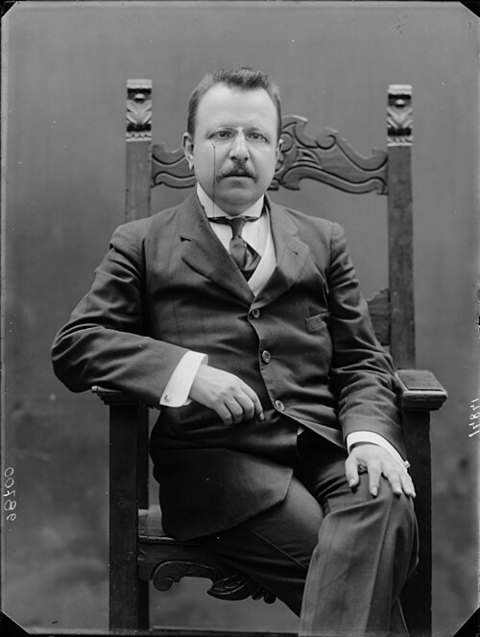
Benedetto Croce, (KROH-chay; Italian: [beneˈdetto ˈkroːtʃe]; 25 February 1866 – 20 November 1952)
was an Italian idealist philosopher, historian, and politician who wrote on numerous topics, including philosophy, history, historiography, and aesthetics. A political liberal in most regards, he formulated a distinction between liberalism (as support for civil liberties) and "liberism" (as support for laissez-faire economics and capitalism). Croce had considerable influence on other Italian intellectuals, from Marxists to Italian fascists, such as Antonio Gramsci and Giovanni Gentile, respectively.
He had a long career in the Italian Parliament, joining the Senate of the Kingdom of Italy in 1910, serving through Fascism and the Second World War before being elected to the Constituent Assembly as a Liberal. In the 1948 general election he was elected to the new republican Senate and served there until his death. He was a longtime member of the Italian Liberal Party, serving as its president from 1944 to 1947.
Croce was the president of the worldwide writers' association PEN International from 1949 until 1952. He was nominated for the Nobel Prize in Literature 16 times.
He is also noted for his "major contributions to the rebirth of Italian democracy". He was an elected International Member of both the American Academy of Arts and Sciences and the American Philosophical Society.