Author
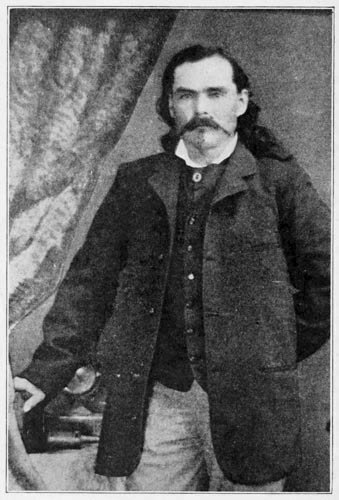
Billy Dixon
United States Army Medal of Honor recipient (1850-1913)
- Born
- September 25, 1850, Ohio County
- Died
- March 9, 1913, Cimarron County
- Nationality
- United States
Life and work
William Dixon (September 25, 1850 – March 9, 1913) was an American scout and bison hunter active in the Texas Panhandle. He helped found Adobe Walls, fired a buffalo rifle shot at the Second Battle of Adobe Walls, and for his actions at the Buffalo Wallow Fight became one of eight civilians to be awarded the U.S. Medal of Honor.
Early life
Dixon was born in Ohio County in the panhandle region of West Virginia, on September 25, 1850. Of European descent, he was orphaned at age 12 and lived with an uncle in Missouri for a year before setting out on his own. He worked in woodcutters' camps along the Missouri River until he started working at age 14 as an ox driver and a muleskinner for a government contractor in Leavenworth, Kansas.
He was a skilled marksman and occasionally scouted for eastern excursionists brought by the railroads. In 1869 he joined a venture in hunting and trapping on the Saline River northwest of Fort Hays in Kansas.
He scouted Texas as far south as the Salt Fork of the Red River when the bison hunters moved into the Texas Panhandle in 1874. He and his group hunted along the Canadian River and its tributaries.
Second Battle of Adobe Walls
Dixon led the founders of Adobe Walls to the Texas Plains, where he knew bison were in abundance. The group of 28 men and one woman occupied the outpost of five buildings 15 miles northeast of Stinnett.
The outpost was attacked on June 27, 1874, by a band of 700–1200 Comanche, Cheyenne and Kiowa. The stand-off continued into a third day, when a small band of Comanche scouts were noticed less than a mile east of Adobe Walls. It is said that Dixon took aim with a quickly borrowed.50 Sharps buffalo rifle (as, according to his biography, he only had a.44 Sharps and felt it could not reach). He knocked one man off his horse, killing him. Understanding how far the guns could fire, the natives then withdrew and left the settlement alone. Dixon’s shot was measured at over 1,500 yards, earning him a position on the list of longest recorded sniper kills.
Text: “Billy Dixon”, from Wikipedia, the free encyclopedia, under the license CC BY-SA 4.0. Dates and facts: Wikidata.
Collection
Books by Billy Dixon
1 book