Thrasymachus
Online reading View book
Author
British philosopher
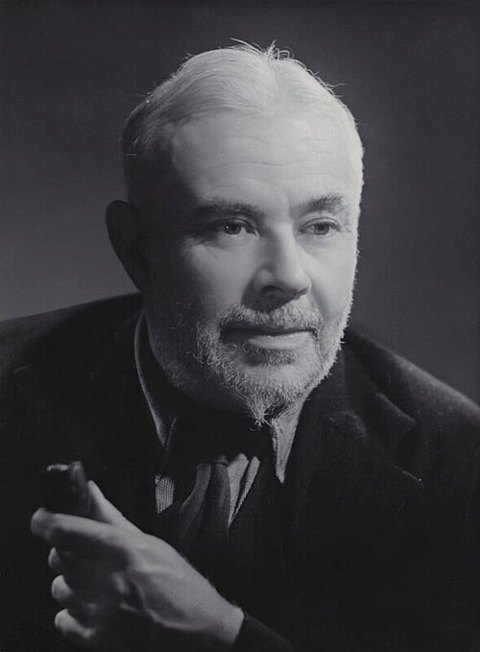
Cyril Edwin Mitchinson Joad (12 August 1891 – 9 April 1953) was an English philosopher, author, teacher and broadcasting personality. He appeared on The Brains Trust, a BBC Radio wartime discussion programme. He popularised philosophy and became a celebrity, before his downfall in a scandal over an unpaid train fare in 1948.
Joad was born in Durham, the only son of Edwin and Mary Joad (née Smith). In 1892 his father became an Inspector of Schools and the family moved to Southampton, where he received a very strict Christian upbringing. Joad started school at the age of five in 1896, attending Oxford Preparatory School (later called the Dragon School) until 1906, and then Blundell's School, Tiverton, Devon, until 1910.
In 1910 Joad went up to Balliol College, Oxford. Here he developed his skills as a philosopher and debater. By 1912 he was a first class sportsman and Oxford Union debater. He also became a Syndicalist, a Guild Socialist, and then a Fabian. In 1913 he heard about George Bernard Shaw through the newly founded magazine the New Statesman. This developed his study of philosophy, one of the building blocks for his career as a teacher and broadcaster. After completing his course at Balliol, achieving a first in Honour Moderations in Literae Humaniores (1912), a first in Greats (a combination of philosophy and ancient history, 1914) and John Locke scholarship in mental philosophy (1914), Joad entered the civil service.
Joad began at the Board of Trade in 1914 after attending a Fabian Summer School. His aim was to infuse the civil service with a socialist ethos. Joad socialised with other Fabians like Agnes Harben and her husband, and was quoted on the experience of meeting suffragettes recovering from hunger strike mixing with the 'county set'. He worked in the Labour Exchanges Department of the Board of Trade, the department becoming the new Ministry of Labour in 1916. In the months leading up to the First World War he displayed "ardent" pacifism, which resulted in political controversy. Joad, along with George Bernard Shaw and Bertrand Russell, became unpopular with many who were trying to encourage men to enlist as soldiers to fight for their country.
Text: “C. E. M. Joad”, from Wikipedia, the free encyclopedia, under the license CC BY-SA 4.0. Dates and facts: Wikidata.
Collection
1 book