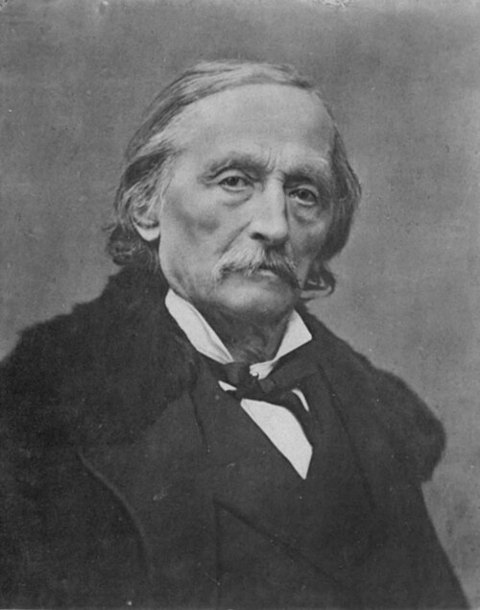
Cesare Cantù (Italian pronunciation: [ˈtʃeːzare kanˈtu, ˈtʃɛː-]; December 5, 1804 – March 11, 1895) was an Italian historian, writer, archivist and politician. An immensely prolific writer, Cantù was one of Italy's best-known and most important Romantic scholars.
Biography
Cantù was born December 5, 1804, at Brivio, near Como in Lombardy. The eldest of ten children, he belonged to an old though impoverished family. He studied in Milan, at the Barnabite College of St. Alexander, and began his career as a teacher. In 1822 he began teaching literature at the liceo in his native Brivio. He went on to teach in Como, and in 1832 in Milan. His first literary essay (1828) was a romantic poem entitled Algiso, and in the following year, he produced a Storia della città e della diocesi di Como in two volumes (Como, 1829). Shortly afterwards appeared Ragionamenti sulla Storia Lombarda nel secolo XVII (Milan, 1832), which was published later under the title Commento storico ai Promessi Sposi di A. Manzoni, o la Lombardia nel secolo XVII. The death of his father then left him in charge of a large family, and he worked very hard both as a teacher and a writer to provide for them. His prodigious literary activity led to his falling under the suspicions of the Austrian police, who thought he was a member of Young Italy, and he was arrested in 1833.
While in prison, writing materials were denied him, but he managed to write on rags with a tooth-pick and candle smoke, and thus composed the historical novel Margherita Pusterla (Milan, 1838). On his release a year later, as he was prohibited from teaching, literature became his only recourse. In 1836 the Turinese publisher, Giuseppe Pomba, commissioned him to write a universal history, which his vast reading enabled him to do. In six years the work was completed in seventy-two volumes, and immediately achieved a general popularity; the publisher made a fortune out of it, and Cantù's royalties amounted, it is said, to 300,000 lire (£12,000). The work was often reprinted, and has been translated into English, German, French, and Spanish.