Author
Charles de Coster
Belgian novelist (1827–1879)
- Born
- August 20, 1827, Munich
- Died
- May 7, 1879, Ixelles
- Nationality
- Belgium
- Occupation
- Writer, journalist and poet
Life and work
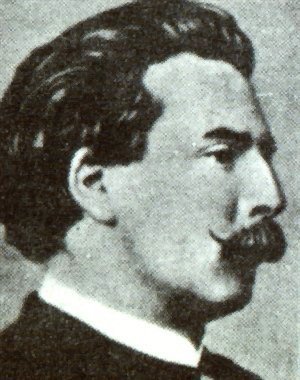
Charles-Theodore-Henri De Coster (20 August 1827 – 7 May 1879) was a Belgian novelist whose efforts laid the basis for a native Belgian literature.
Early life and education
He was born in Munich; his father, Augustin De Coster, was a native of Liège, who was attached to the household of the Apostolic Nuncio to Bavaria in Munich, but soon returned to Belgium. Charles was placed in a Brussels bank, but in 1850 he entered the Free University of Brussels, where he completed his studies in 1855. He was one of the founders of the Société des Joyeux, a small literary club, more than one member of which was to achieve literary distinction.
De Coster made his debut as a poet in the Revue trimestrielle, founded in 1854, and his first efforts in prose were contributed to a periodical entitled Uylenspiegel (founded 1856). A correspondence covering the years 1850 to 1858, his Lettres à Elisa, were edited by Charles Potvin in 1894.
He was a keen student of François Rabelais and Michel de Montaigne, and familiarized himself with 16th-century French. He said that Flemish manners and speech could not be rendered faithfully in modern French, and accordingly wrote his best works in the old tongue. The success of his Légendes flamandes (1856) was increased by the illustrations of Félicien Rops and other friends. In 1861 he published his Contes brabançons, in modern French.
Career
His masterpiece, The Legend of Thyl Ulenspiegel and Lamme Goedzak (1867), a romance set in the 16th century, was barely read in Belgium because it did not meet up to the conventional standard of Belgian nationalism, but became popular in the rest of the world. In preparation for this prose epic of the Gueux he spent some ten years. The character Uylenspiegel (Eulenspiegel) has been compared to Don Quixote, and even to Panurge. He is the type of the 16th-century Fleming, and the history of his resurrection from the grave itself was accepted as an allegory of the destiny of the race. His exploits and his friend's form the thread of a semihistorical narrative, full of racy humour, in spite of the barbarities that find a place in it. This book was illustrated by Félicien Rops and by others.
Text: “Charles De Coster”, from Wikipedia, the free encyclopedia, under the license CC BY-SA 4.0. Dates and facts: Wikidata.
Collection
Books by Charles de Coster
2 books