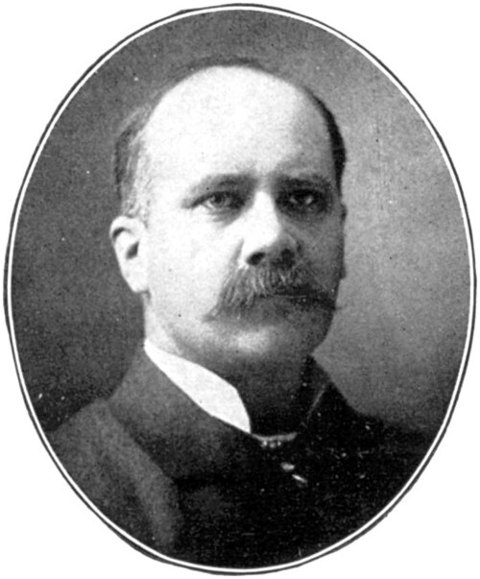
Charles Monroe Sheldon (February 26, 1857 – February 24, 1946) was an American Congregationalist minister and a leader of the Social Gospel movement. His 1896 novel In His Steps introduced the principle "What would Jesus do?", which articulated an approach to Christian theology that became popular at the turn of the 20th century and enjoyed a revival almost one hundred years later. The stretch of US-24 on the north side of Topeka, Kansas, between US-75 and K-4 is named the "Charles Sheldon Trafficway" in his honor.
Education and ministry
Charles Sheldon was born in Wellsville, New York. He was a graduate of Phillips Academy, Andover (class of 1879), and of Brown University in 1883. He pastored a church at Waterbury, Vermont, from 1886 to 1888, and in 1889 became pastor of the Central Congregational Church in Topeka, Kansas.
Sheldon became an advocate of the late-nineteenth-century school of thought known as Christian Socialism. His theological outlook focused on the practicalities of the moral life, de-emphasizing the doctrinal traditions of personal redemption from sin in Christ. In the winter of 1896 Sheldon developed a sermon story that he read as a weekly series from the pulpit of Central Congregational Church. The unifying theme of these sermons was based on asking oneself the question "What would Jesus do?" when facing moral decisions. He viewed this question as central to Christianity, and likely drew some inspiration from William T. Stead's If Christ came to Chicago! (1893) and other earlier sources.