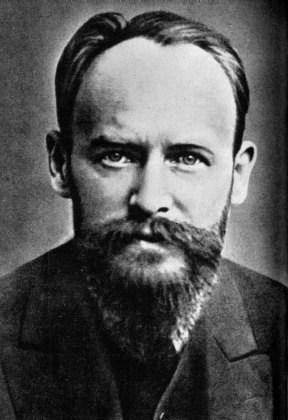
Author
Christian Morgenstern
German author (1871-1914)
- Born
- May 6, 1871, Munich
- Died
- March 31, 1914, Untermais
- Nationality
- Kingdom of Bavaria
- Occupation
- Poet, writer, translator, literary editor and journalist
- Notable works
- Gallows Songs
Life and work
Christian Otto Josef Wolfgang Morgenstern (6 May 1871 – 31 March 1914) was a German writer and poet from Munich. Morgenstern married Margareta Gosebruch von Liechtenstern on 7 March 1910. He worked for a while as a journalist in Berlin, but spent much of his life traveling through Germany, Switzerland, and Italy, primarily in a vain attempt to recover his health. His travels, though they failed to restore him to health, allowed him to meet many of the foremost literary and philosophical figures of his time in central Europe.
Poetry
Morgenstern's poetry, much of which was inspired by English literary nonsense, is immensely popular, even though he enjoyed very little success during his lifetime. He made fun of scholasticism, e.g. literary criticism in "Drei Hasen", grammar in "Der Werwolf", narrow-mindedness in "Der Gaul", and symbolism in "Der Wasseresel". In "Scholastikerprobleme" he discussed how many angels could sit on a needle. Still many Germans know some of his poems and quotations by heart, e.g. the following line from "The Impossible Fact" ("Die unmögliche Tatsache", 1910):
Weil, so schließt er messerscharf / Nicht sein kann, was nicht sein darf.
"For, he reasons pointedly / That which must not, can not be."
Embedded in his humorous poetry is a subtle metaphysical streak, as e.g. in "Vice Versa", (1905):
Gerolf Steiner's mock-scientific book about the fictitious animal order Rhinogradentia (1961), inspired by Morgenstern's nonsense poem Das Nasobēm, is testament to his enduring popularity.
Text: “Christian Morgenstern”, from Wikipedia, the free encyclopedia, under the license CC BY-SA 4.0. Dates and facts: Wikidata.
Collection
Books by Christian Morgenstern
1 book