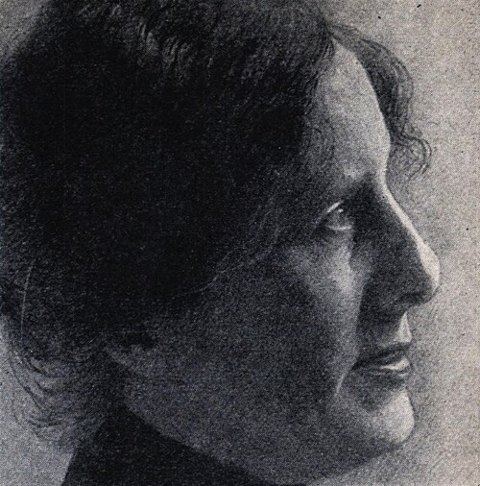
Dikken Zwilgmeyer (20 September 1853 – 28 February 1913) was a Norwegian fiction writer. She is most noted for her children's literature and for her "Inger Johanne" series of books.
Personal life
Barbara Hendrikke Wind Daae Zwilgmeyer was born in Trondheim, Norway. She was one of seven children born to Peter Gustav Zwilgmeyer (1813–1887) and Margrethe Gjørvel Daae (1825–1887). Her father was a Stipendiary magistrate and Member of the Norwegian Parliament. She and her family lived in Risør in Nedenes county from the time she was 8 years old. Her uncle Ludvig Daae was a politician and Minister of the Army. Her grandfather, Heinrich Carl Zwilgmeyer (1761–1850) had immigrated to Norway from Hanover, Germany. She never married. She died at Kongsberg in Buskerud and was buried at Vår Frelsers gravlund in Oslo.
Career
Zwilgmeyer had no formal education. She showed early talent for painting and writing, and took lessons with various painters, including Christian Krohg. Her first published story was "En Hverdagshistorie", printed in the magazine Nyt Tidsskrift in 1884. Her first story for children was "Afbrudt 17. mai", published in the magazine Illustreret Tidende for Børn.
Her first children's book was Vi børn from 1890. It written under the pseudonym "Inger Johanne, 13 years old". Inger Johanne was described as the daughter of a judge in a small Norwegian town. This book became a great success, and eleven more "Inger Johanne" books followed. Among these are Karsten og jeg from 1891, Fra vor by from 1892, and Barndom from 1895. Anniken Præstgaren from 1900 is probably the book with largest audience. It is estimated that Zwilgmeyer's books were printed in 600,000 copies up to 1903. "Inger Johanne" remained a favourite for Norwegian children for generations, and Zwilgmeyer's books are regarded as a significant innovation of Norwegian children's literature around 1900.