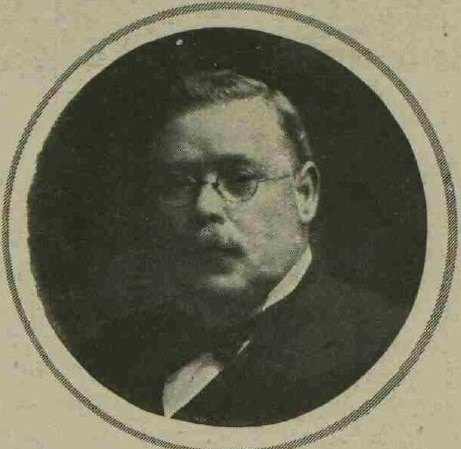
Sir Ernest Alfred Thompson Wallis Budge (27 July 1857 – 23 November 1934) was an English Egyptologist, Orientalist, and philologist who worked for the British Museum and published numerous works on the ancient Near East. He made numerous trips to Egypt and Anglo-Egyptian Sudan on behalf of the British Museum to buy antiquities, and helped it build its collection of cuneiform tablets, manuscripts, and papyri. He published many books on Egyptology, helping to bring the findings to larger audiences. In 1920, he was knighted for his service to Egyptology and the British Museum.
Early life and education
E. A. Wallis Budge was born in 1857 in Bodmin, Cornwall, to Mary Ann Budge, a young woman whose father was a waiter in a Bodmin hotel. Budge's father has never been identified. Budge left Cornwall as a boy, and eventually came to live with his maternal aunt and grandmother in London.
Budge became interested in languages before he was ten years old, but left school at the age of twelve in 1869. He worked as a clerk at the retail firm of W. H. Smith, from 1870 to 1878. In his spare time, he studied Biblical Hebrew and Syriac with the aid of Charles Seager.
Spending time in the British Museum, from 1872, Budge became interested in learning the ancient Assyrian language in 1872, and introduced himself to Samuel Birch, keeper of Oriental Antiquities there. He met also Birch's assistant, the Assyriologist George Smith. Smith gave Budge some help with his Assyrian, and Birch allowed him to study cuneiform tablets in his office. Through Birch, Budge also had access to the museum's books, such as Austen Henry Layard's Nineveh and Its Remains.