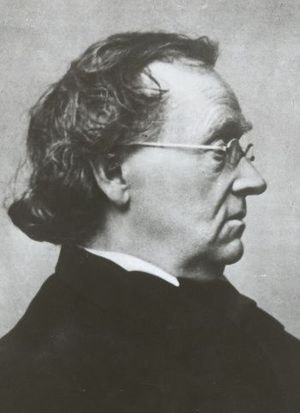
Eduard Friedrich Mörike (German pronunciation: [ˈeːdu.aʁt ˈfʁiːdʁɪç ˈmøːʁɪkə]; 8 September 1804 – 4 June 1875) was a German Lutheran pastor who was also a Romantic poet and writer of novellas and novels. Many of his poems were set to music and became established folk songs, while others were used by composers Hugo Wolf and Ignaz Lachner in their symphonic works.
Biography
Mörike was born in Ludwigsburg as the seventh child of Karl Friedrich Mörike (1763–1817), a district medical councilor and his wife Charlotte Mörike née Bayer (1771–1841). He had 13 siblings of which seven died young. After the death of his father, in 1817, he went to live with his uncle Eberhard Friedrich von Georgii, president of Württemberg Supreme Tribunal in Stuttgart, who intended his nephew to become a clergyman.
After one year at the Stuttgart Gymnasium Illustre, he scored low grades and failed the admission test to Urach Seminary, yet was accepted anyhow. Mörike joined the Evangelical Seminary Urach, a humanist grammar school, in 1818. There he found his closest friend, Wilhelm Hartlaub (1804–1885), as well as Johannes Mährlen (1803–1871), to whom he remained close throughout his life. Also close from this time onward was the brilliant poet Wilhelm Waiblinger, who died in 1830. He published a selection of Waiblinger's poems in 1844 and dedicated an essay to him in 1845.
From 1822 to 1826 attended the Tübinger Stift Seminary to study theology and classics, the latter something that was to become a major influence on his writing. He met the kindred spirit and poetically gifted Ludwig Amandus Bauer (1803–1846). In 1825, Friedrich Theodor Vischer and David Friedrich Strauss joined. Many of these friendships were long-lasting. In Tübingen, with Bauer, he invented the fairyland Orplid – see the poem Song Weylas (You are Orplid) dating from 1831. Their shared imaginations gave rise to the Orplid myth, which they later developed into a literary work.