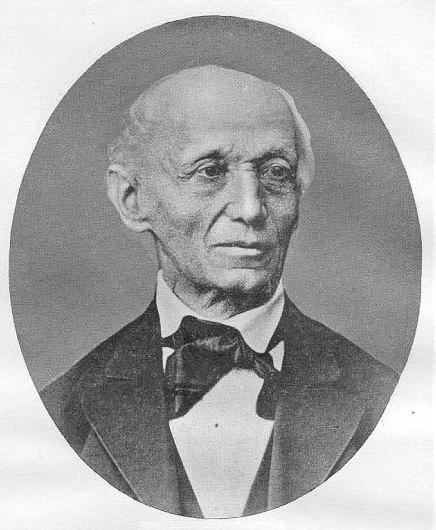
Eduard Gottlob Zeller (German: [ˈtsɛlɐ]; 22 January 1814 – 19 March 1908) was a German philosopher and Protestant theologian of the Tübingen School of theology. He was well known for his writings on Ancient Greek philosophy, especially pre-Socratic philosophy, and most of all for his celebrated, multi-volume historical treatise The Philosophy of Greeks in their Historical Development (1844–52). Zeller was also a central figure in the rise of neo-Kantianism.
Life
Eduard Zeller was born in Kleinbottwar in the Kingdom of Württemberg, the son of a government official. He was educated first at the Evangelical Seminaries of Maulbronn and Blaubeuren starting in 1831, and later at the University of Tübingen (the Tübinger Stift), then much under the influence of Hegel. He received his doctorate in 1836 with a thesis on Plato's Laws. In 1840 he was Privatdozent of theology at Tübingen, in 1847 professor of theology at Bern, and in 1849 professor of theology at Marburg, where he soon shifted to the philosophy faculty as the result of disputes with the Clerical party. He became professor of philosophy at the University of Heidelberg in 1862, moved to Berlin in 1872, and retired around 1895. He remained best known for his The Philosophy of Greeks in Their Historical Development (1844–52). He continued to expand and improve this work to reflect new research, and the last edition appeared in 1902. It was translated into most European languages and became the standard textbook on Greek philosophy.