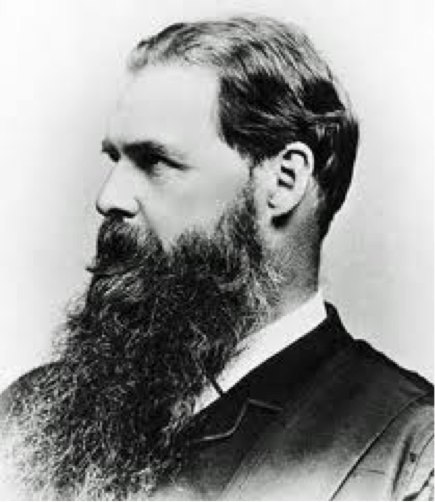
Sir Edward Burnett Tylor (2 October 1832 – 2 January 1917) was an English anthropologist, and professor of anthropology.
Tylor's ideas typify 19th-century cultural evolutionism. In his works Primitive Culture (1871) and Anthropology (1881), he defined the context of the scientific study of anthropology, based on the evolutionary theories of Charles Lyell. He believed that there was a functional basis for the development of society and religion, which he determined was universal. Tylor maintained that all societies passed through three basic stages of development: from savagery, through barbarism to civilization. Tylor is a founding figure of the science of social anthropology, and his scholarly works helped to build the discipline of anthropology in the nineteenth century. He believed that "research into the history and prehistory of man [...] could be used as a basis for the reform of British society".
Tylor reintroduced the term animism (faith in the individual soul or anima of all things and natural manifestations) into common use. He regarded animism as the first phase in the development of religions.