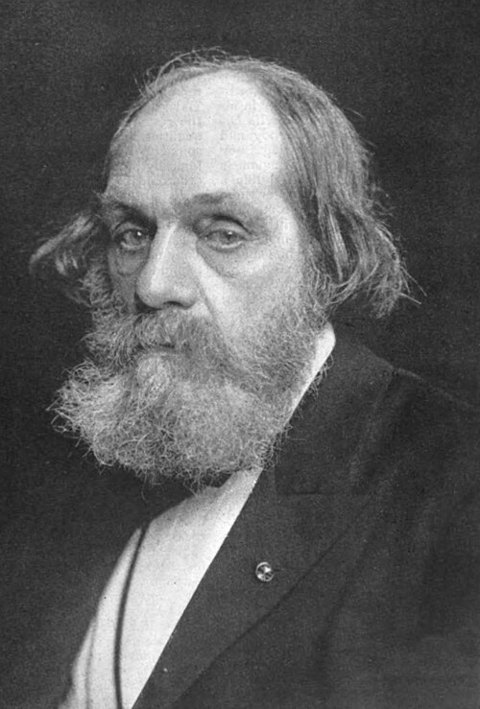
Edward Everett Hale (April 3, 1822 – June 10, 1909) was an American author, historian, and Unitarian minister, best known for his writings such as "The Man Without a Country", published in Atlantic Monthly, in support of the Union during the Civil War. He was the grand-nephew of Nathan Hale, an American Revolutionary War spy.
Life and career
Hale was born on April 3, 1822, in Boston, Massachusetts, the son of Nathan Hale (1784–1863), proprietor and editor of the Boston Daily Advertiser, and Sarah Preston Everett; and the brother of Lucretia Peabody Hale, Susan Hale, and Charles Hale. Edward Hale was a nephew of Edward Everett, the orator and statesman, and grand-nephew of Nathan Hale (1755–1776), the Revolutionary War hero executed by the British for espionage. Edward Everett Hale was also a descendant of Richard Everett and related to Helen Keller.
Hale was a child prodigy who exhibited extraordinary literary skills. He graduated from Boston Latin School at age 13 and enrolled at Harvard College immediately after. There, he settled in with the literary set, won two Bowdoin Prizes and was elected the Class Poet. He graduated second in his class in 1839 and then studied at Harvard Divinity School. Decades later, he reflected on the new liberal theology there:
The group of leaders who surrounded Dr. [William Ellery] Channing had, with him, broken forever from the fetters of Calvinistic theology. These young people were trained to know that human nature is not totally depraved. They were taught that there is nothing of which it is not capable... For such reasons, and many more, the young New Englanders of liberal training rushed into life, certain that the next half century was to see a complete moral revolution in the world.