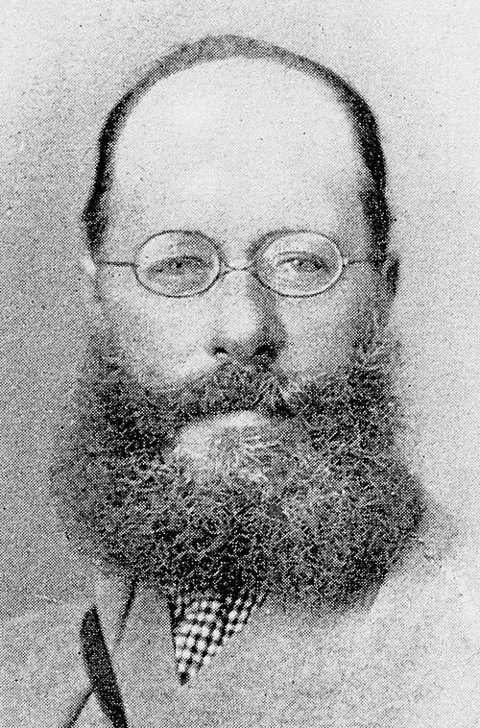
Edward Lear (12 May 1812 – 29 January 1888) was an English artist, illustrator, musician, author and poet, who is known mostly for his literary nonsense in poetry and prose and especially his limericks, a form he popularised but which term he never used.
His principal areas of work as an artist were threefold: as a draughtsman employed to make illustrations of birds and animals, making coloured drawings during his journeys (which he reworked later, sometimes as plates for his travel books) and as a minor illustrator of Alfred, Lord Tennyson's poems.
As an author, he is known principally for his popular nonsense collections of poems, songs, short stories, botanical drawings, recipes and alphabets. He also composed and published twelve musical settings of Tennyson's poetry.
Early years
Lear was born into a middle-class family in Holloway north London, the penultimate of 21 children (and youngest to survive) of Ann Clark Skerrett and Jeremiah Lear, a stockbroker formerly working for the family sugar refining business. He was raised by his eldest sister, also named Ann, 21 years his senior. Jeremiah Lear ended up defaulting to the London Stock Exchange in the economic upheaval following the Napoleonic Wars. Because of the family's now more limited finances, when he was aged four, Lear and his sister were required to leave the family home, Bowmans Lodge, and live together. Ann doted on Edward and continued to act as a mother to him until her death, when he was almost 50 years of age.
Lear had lifelong health problems. From the age of six, he had frequent tonic-clonic epileptic seizures, bronchitis, asthma and, during later life, partial blindness. Lear experienced his first seizure at a fair near Highgate when with his father. The event scared and embarrassed him. He felt lifelong guilt and shame for his epileptic condition, and his adult diaries indicate that he always sensed the onset of a seizure in time to remove himself from public view. When Lear was about seven years old he began to show signs of depression, possibly due to the instability of his childhood. He had periods of severe melancholia which he referred to as "the Morbids".