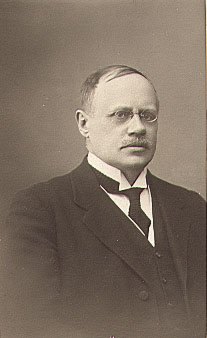
Edvard Alexander Westermarck (20 November 1862 – 3 September 1939) was a Finnish social anthropologist, sociologist and philosopher. He was the most internationally prominent Finnish scholar of his time, known for his work on the history of marriage and the origin of moral ideas. He was the first to lecture on sociology in both England and the Nordic countries, and held professorships at the London School of Economics, the University of Helsinki and Åbo Akademi University, where he also served as the first rector. He is perhaps best remembered today for the Westermarck effect, the hypothesis that children raised in close proximity develop a natural aversion to sexual relations with each other. His scholarly interest in human sexuality and marriage has been linked by some biographers to his own presumed homosexuality.
In the UK, his name is often spelled Edward. His sister, Helena Westermarck, was a writer and artist.