Author
Élie Faure
French art historian and essayist (1873-1937)
- Born
- April 4, 1873, Sainte-Foy-la-Grande
- Died
- October 30, 1937, 6th arrondissement of Paris
- Nationality
- France
- Occupation
- Art historian, physician, historian, writer and critic
Life and work
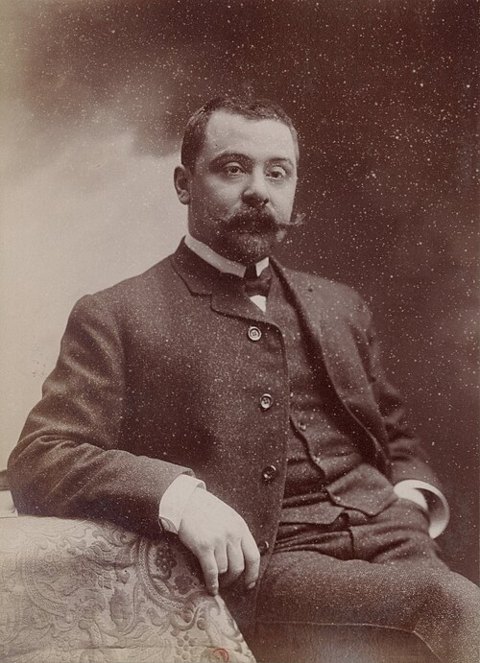
Jacques Élie Faure (French pronunciation: [ʒak eli fɔʁ]; 4 April 1873 in Sainte-Foy-la-Grande, France – 29 October 1937 in Paris) was a French medical doctor, art historian and essayist.
He was called "the greatest art critic of the 1920s and 30s". He is the author of the History of Art, considered a historiographical pillar in the discipline.
Youth and Training
Élie Faure was the son of Pierre Faure, a merchant, and Zéline Reclus. He was close to two of his uncles, namely the geographer and anarchist activist Élisée Reclus and the ethnologist Élie Reclus. In 1888, he joined his brothers Léonce and Jean-Louis in Paris and enrolled at the Lycée Henri-IV, where he had as classmates in philosophy class Léon Blum, R. Berthelot, Gustave Hervé, and Louis Laloy.
Passionate about painting, he often visited the Louvre and immersed himself in the works of his philosophy teacher, Henri Bergson.
With his baccalaureate in hand, he enrolled in the faculty of medicine and began practicing in working-class neighborhoods in Paris. He worked as an anesthesiologist and specialized in embalming with his brother Jean-Louis, a surgeon and gynecologist. Nevertheless, he continued to attend exhibitions and regularly visited workshops of painters and sculptors.
On 7 April 1896, he married Suzanne Gilard, daughter of the pastor of Eynesse. They had a daughter, Elisabeth, whom his friend, the painter Eugène Carrière, sketched in 1902. On 3 May 1899, Élie Faure presented his doctoral thesis in medicine, which dealt with an innovative treatment for lupus.
Text: “Élie Faure”, from Wikipedia, the free encyclopedia, under the license CC BY-SA 4.0. Dates and facts: Wikidata.
Collection
Books by Élie Faure
1 book